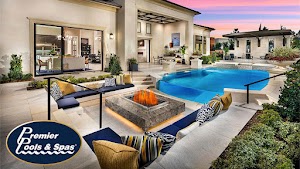

Inground Pool Builders in Phoenix, AZ
We build custom inground pools across Phoenix and the greater Valley of the Sun. Our team knows Arizona’s building codes, Maricopa County’s permitting process, and what it takes to build in the caliche soil and extreme heat conditions that define construction in the Sonoran Desert.
1,100+ luxury inground pools built every year | Serving 11 cities across FL, VA, NC, SC, TX, AZ & CA
What It Costs to Build a Pool in Phoenix
Phoenix is one of the strongest pool markets in the country. A pool here isn’t just a seasonal luxury. It’s something you use eight or nine months of the year, and in some parts of the Valley, it genuinely affects whether a home sells. That demand keeps the market active and competitive, which works in your favor on pricing compared to California or the Northeast.
Most homeowners in the Phoenix area budget somewhere between $45,000 and $130,000+ for a custom inground pool.
| Pool Type | Typical Cost Range | Timeline |
|---|---|---|
| Shotcrete | $45,000 to $100,000+ | 2 to 3 months |
| Fiberglass | $65,000 to $130,000+ | 4 to 8 weeks |
Where you land in that range also depends on:
- Pool size and shape: A straightforward rectangle costs less than a freeform design with a spa, beach entry, and water features. In Phoenix, larger pools are common since lot sizes here tend to support them.
- Features: Automation, LED lighting, spillover spas, bubblers, fire features, and outdoor kitchens all add to the number. Phoenix homeowners tend to go all-in on outdoor living because the outdoor season here is long and the backyard gets used constantly.
- Tiles and finishes: Shotcrete pools require a surface finish such as plaster, pebble, or tile. In Phoenix’s heat, finish quality matters more than in cooler climates. The surface is exposed to intense UV and temperature swings year-round. The difference between basic plaster and a premium pebble or glass tile finish can be $10,000 to $20,000.
- Caliche: This is the big one in the Valley. Caliche is a hardened calcium carbonate layer that sits below grade across much of Maricopa County. It ranges from a few inches thick to several feet, and when it’s encountered during excavation, it requires jackhammering or specialized equipment. It adds time and cost that can’t be predicted without a site visit.
- Shade structures and decking: In Phoenix, the area around the pool matters as much as the pool itself. Travertine decking, pergolas, and shade structures are standard additions because an unshaded pool deck in July is unusable by midday.
For a full breakdown, see our Inground Pool Cost guide.
Not Sure What a Pool Would Cost on Your Property?
Get a personalized estimate based on your backyard and design goals.
Pool Types We Build in Phoenix
Both pool types hold up in Phoenix, but the extreme climate creates some considerations worth understanding before you decide.
Shotcrete
Shotcrete is the most common choice for custom pools in the Phoenix market. It’s built on-site to whatever shape, depth, and finish you want. Freeform designs, beach entries, attached spas, grottos, and vanishing edges all come from shotcrete.
Shotcrete is a wet-mix concrete process. It’s closely related to gunite, which uses a dry mix, and the two terms get used interchangeably in a lot of markets. In Phoenix, shotcrete is the standard.
Build time runs 2 to 3 months from breaking ground. One thing that surprises people moving here from other markets: shotcrete often starts lower than fiberglass in Phoenix. Fiberglass shells are manufactured elsewhere and trucked in, which adds cost, while Phoenix has enough concrete pool volume to keep shotcrete pricing competitive. The range is wide though. A straightforward shotcrete pool and a fully custom one with a spa and water features are very different projects.
The Phoenix heat does affect shotcrete ownership in one specific way. Plaster and pebble finishes need more attention to water chemistry in extreme heat because evaporation is high and chemical demand shifts more than in cooler climates. A pebble or quartz finish holds up better than basic plaster in Valley conditions.
Fiberglass
Fiberglass costs more upfront than shotcrete in Phoenix, so the reason to choose it isn’t price. It’s speed and maintenance.
Installation is faster, with some projects wrapping up in 4 to 8 weeks compared to 2 to 3 months for shotcrete. The smooth, non-porous surface needs less chemical maintenance than plaster, which is a real advantage when evaporation is high and you’re adding water and chemicals more frequently than in other markets. It also doesn’t need resurfacing on the same schedule as shotcrete.
The trade-off is shape. You’re choosing from the manufacturer’s existing molds rather than designing something fully custom.
One thing we don’t build: vinyl liner pools. In Phoenix’s heat and UV exposure, a vinyl liner degrades faster than in cooler climates. It’s not a fit for this market or for the investment level we’re talking about.
Not sure which type is right for you? Our Pool Type Quiz can help.
Our Pool Installation Process
Phoenix is a high-volume pool market, which affects how construction and permitting work here compared to smaller cities.
- Site visit and design: Every project starts with an in-person visit. Caliche depth varies significantly across the Valley, so conditions in Scottsdale can be very different from those in Chandler. Yard orientation, shade patterns, and equipment pad placement all matter more in Phoenix's heat than they do in most markets. After the visit, we build a 3D design from your actual yard dimensions, usually within 48 to 96 hours.
- Permits: Pool construction in Arizona requires a building permit. In the Phoenix metro, permitting runs through your specific city. Phoenix, Scottsdale, Mesa, Chandler, Glendale, Surprise, or Goodyear each have their own building departments and their own timelines. Plan for 2 to 12 weeks depending on your city and current volume. We handle all permitting for you.
- Construction: Excavation is first, and caliche is the main variable. Once the shell is in, plumbing, electrical, tile, coping, decking, and equipment follow in sequence. Phoenix’s heat means certain phases, particularly concrete and plaster work, need to be timed carefully in summer. Experienced crews know how to manage this. We keep you updated throughout so you know exactly where things stand.
- Startup and handoff: Once the pool is filled and equipment is running, we walk you through everything in a 60 to 90 minute Pool School session at your home. Proper startup in Phoenix is more involved than in cooler markets. For shotcrete pools, the first 28 days of chemistry and brushing are critical to the long-term condition of the surface. We make sure you leave knowing exactly what to do.
For a full breakdown of every phase, see our Inground Pool Installation Process guide.
Pool Installation Timeline
These timelines run from breaking ground to first swim. Permitting is separate and adds 2 to 12 weeks.
- Shotcrete: 2 to 3 months
- Fiberglass: 4 to 8 weeks
Phoenix is one of the few markets where construction runs genuinely year-round. There’s no freeze season and no extended rainy period that shuts things down. That said, summer does create its own considerations.
Extreme heat in July and August can affect concrete curing, plaster application, and crew scheduling. Experienced builders plan around this. It doesn’t stop construction, but it does affect how certain phases get scheduled.
Caliche excavation, when it’s significant, adds time regardless of season. It’s the most common reason a Phoenix pool build runs longer than the initial estimate.
One more thing worth knowing: Phoenix is a high-demand pool market and builders stay busy. Lead times for starting a new project can stretch. If you have a target completion date in mind, start the conversation sooner rather than later.
We’ll give you a realistic timeline during your consultation, not an optimistic one.
Popular Pool Features in Phoenix
Phoenix has one of the most developed backyard pool cultures in the country. These are the features we build most often in this market.
- Sheer descent waterfalls and deck jets: Sheet waterfalls spilling from a raised wall into the pool, and arcing deck jets, are among the most common water features in this market. They fit the clean, geometric designs that work well with Phoenix's contemporary desert architecture, and the sound helps in a backyard where you're outside most of the year.
- Raised spas with tile facing: Rather than a spa set flush with the deck, most of what we build here is raised and finished with stone veneer or glass tile so it works as a design element as well as a spa. Arizona winters are mild but cool enough that a heated spa gets used from October through April. Snowbirds and full-time residents alike use them consistently outside the swimming season.
- Covered patios and shade structures: In Phoenix, shade isn’t optional. A pool without a covered area nearby is a pool that doesn’t get used from 11am to 4pm in summer. Most of our projects include a pergola, ramada, or extended covered patio as part of the overall design.
- Fire features: Fire bowls and fire pits paired with a pool and covered patio are popular year-round. Phoenix evenings from October through April are some of the best outdoor conditions in the country, and a fire feature extends the backyard into a space that gets used after dark throughout the cooler months.
- Travertine and cool deck surfaces: Standard concrete decking gets dangerously hot in Phoenix summers. Travertine stays cooler than most alternatives and is one of the most common decking choices we see. Cool deck coatings are another option. Either way, decking material is a more important decision in Phoenix than in most other markets.
- Outdoor kitchens: A built-in grill and counter space next to the pool is a common addition here, and it's usually built into the same covered structure that provides the shade.
- Automation systems: Full pool automation is standard at this price point in Phoenix. Managing pump schedules, chemical dosing, and temperature remotely matters in a market where summer utility bills are already high and efficiency gains add up. Many homeowners also run their pools remotely while traveling.
- LED lighting: Color-changing LED lighting in the pool, spa, and water features is close to standard on custom builds here. Phoenix evenings are warm for most of the year, so the pool gets real use after dark and lighting changes how the whole space looks at night.
Ready to Start Planning Your Pool?
Areas We Serve
We serve Phoenix and the greater Valley of the Sun, including:
- Phoenix
- Scottsdale
- Mesa
- Chandler
- Glendale
- Surprise
- Goodyear
- Fountain Hills
- Queen Creek
- Buckeye
- Peoria
- Tempe
- Gilbert
- Avondale
- Maricopa
- Casa Grande
- Florence
- Paradise Valley
- San Tan Valley
If your address isn’t on that list, reach out anyway. If we serve your area, we’ll tell you. If we don’t, we’ll tell you that too.
What Homeowners Are Saying


Highly recommended!

In the end, the price for the pool we like was higher than our budget allowed, so we had to pass. Dirk handled that with total professionalism and kindness , no pressure at all.We just weren’t able to make it work financially at this time.
If you’re in the market for a pool, I’d highly recommend asking for Dirk.
He’s one of the nicest and most helpful salesmen we’ve ever worked with.
Great experience overall!!!



A special shoutout goes to Nolan, our sales representative, who truly went above and beyond every step of the way. His customer service was nothing short of outstanding. He took the time to understand our vision, answered every question with patience and expertise, and made sure we felt confident and informed throughout the entire process. Nolan was not only knowledgeable and responsive, but also genuinely invested in making our dream pool a reality.
The craftsmanship and attention to detail in the finished product are simply top-notch. Premier delivered on everything they promised, with incredible quality. We are absolutely elated with how everything turned out, and our backyard has been completely transformed into a luxurious oasis!
If you're considering a pool project, look no further than Premier Pools — and be sure to ask for Nolan. He’s a true professional who genuinely cares about his clients and takes pride in delivering an exceptional experience.
Highly, highly recommended!
FAQs
Do I need a permit to build a pool in Phoenix?
Yes. Pool construction in Arizona requires a building permit. In the Phoenix metro, each city runs its own building department. Phoenix, Scottsdale, Mesa, Chandler, Glendale, Surprise, and Goodyear all have separate processes and timelines. We handle all permitting as part of the project. You don’t need to figure out which department applies to your address.
What is caliche and how does it affect my pool build in Phoenix?
Caliche is a hardened calcium carbonate layer that forms naturally below grade across much of the Sonoran Desert. It’s common throughout Maricopa County and varies from a few inches thick to several feet deep depending on location.
When excavation hits a significant caliche layer, it requires jackhammering or rock-breaking equipment and adds time and cost to the project. It’s one of the first things we assess during the site visit, and one of the reasons a quote built without seeing your lot isn’t reliable.
How does Phoenix’s heat affect pool ownership and maintenance?
More than most homeowners expect. High evaporation means you’re adding water more frequently. UV exposure and temperature swings affect chemical balance more than in cooler climates. Shotcrete pools with plaster finishes need closer attention to chemistry, particularly in summer, and the first 28 days after the pool is filled are especially important for the long-term condition of the surface. We walk you through all of this at startup.
When is the best time to build a pool in Phoenix?
Construction runs year-round, but fall and winter are the most comfortable build seasons for both crews and homeowners. Starting in October or November means you’re likely swimming by spring, which is when Phoenix weather is at its best. Summer builds are possible but certain phases need careful scheduling around the heat.
What decking material works best in Phoenix?
Travertine is the most popular choice in this market because it stays cooler underfoot than standard concrete or pavers. Cool deck coatings are another common option. Standard grey concrete is the least recommended choice for Phoenix. It absorbs heat and becomes painful to walk on barefoot by midday in summer. We’ll walk you through decking options during the design phase.
What’s the difference between shotcrete and fiberglass in Phoenix’s climate?
Both work well here, but in different ways. Shotcrete gives you complete design freedom but requires more attention to water chemistry in the heat and needs resurfacing every 15 to 20 years. Fiberglass requires less chemical maintenance, which is a genuine advantage in Phoenix’s evaporation-heavy climate, but limits you to available shapes and sizes. Fiberglass also starts higher than shotcrete in this market, so the reason to choose it is speed and maintenance rather than cost.
See the Pool Types We Build section above, or take our Pool Type Quiz for a recommendation based on your situation.
How much does a pool add to home value in Phoenix?
Significantly. Phoenix is one of the markets in the country where a pool has the clearest impact on home value. In many Valley neighborhoods, a home without a pool sits longer and sells for less than a comparable home with one.
In higher-end areas like Scottsdale, Paradise Valley, and Chandler, a well-built pool with outdoor living features is an expected part of what a premium property offers.
Is shotcrete the same thing as gunite?
Not quite. Both are concrete applied through a hose, but shotcrete uses a wet mix that’s blended before it reaches the nozzle, while gunite uses a dry mix with water added at the nozzle. The two terms get used interchangeably in a lot of markets, and homeowners researching pools will see “gunite” far more often. In Phoenix, shotcrete is what we build.
Ready to Talk?
If you’re ready to have a real conversation about building a pool on your property, we’re available for a free consultation. No obligation, no pressure. You’ll walk away with a clearer picture of what’s realistic for your budget, your lot, and your timeline.
| 1,100+ luxury inground pools built every year | Serving 11 cities across FL, VA, NC, SC, TX, AZ & CA
Get a Personalized Inground Pool Estimate