The average cost of pool maintenance ranges from $120 to $500 per month for most homeowners. That works out to roughly $1,500 to $6,000 per year for routine maintenance.
This average can vary. What you actually spend depends on your pool type, equipment, location and how often you use it. This guide breaks down every cost involved so you can budget accurately and avoid surprises later.
Average Cost to Maintain a Pool
| Frequency | Average Cost |
|---|---|
| Per visit (first clean) | $150 to $350 |
| Per visit (ongoing) | $75 to $150 |
| Per month | $120 to $500 |
| Per year | $1,500 to $6,000 |
Most homeowners spend between $120 and $500 per month on routine maintenance. The numbers in the table include regular cleaning, chemical balancing, and basic equipment checks. Repairs, resurfacing, and major equipment replacement are separate costs.
The biggest swings in cost come from your pool type, size, and where you live. For instance, a large heated concrete pool can easily push past $400 per month in maintenance costs. And a well-maintained fiberglass pool with a variable-speed pump can stay under $100 per month.
Pool Maintenance Cost by Pool Type
The money you spend on chemicals, cleaning, and long-term upkeep of the pool can vary depending on the pool material. Let’s take a look:
| Pool Type | Avg. Monthly Maintenance Cost | Avg. Annual Maintenance Cost |
|---|---|---|
| Vinyl liner | $100 to $210 | $1,200 to $2,500 |
| Fiberglass | $85 to $170 | $1,000 to $2,000 |
| Gunite | $170 to $335 | $2,000 to $4,000 |
Note: These monthly figures assume weekly professional service, the standard for most actively used residential pools. Less frequent service can lower cost but increases the risk of algae and chemical imbalance between visits.
Vinyl Liner Pool Maintenance Cost
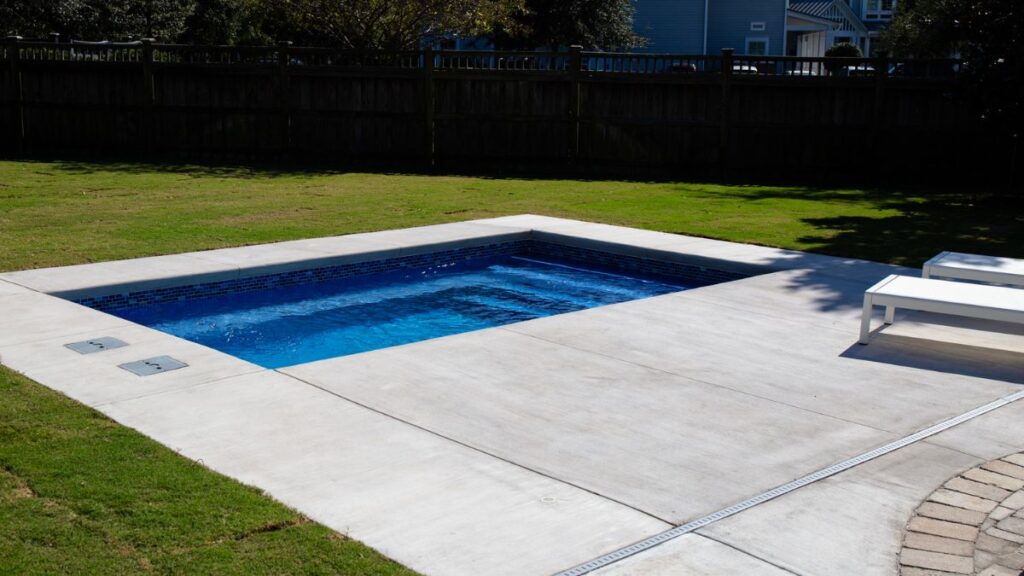
Maintenance cost: $100 to $210 per month ($1,200 to $2,500 per year)
Vinyl pools have a smooth, non-porous surface, so algae doesn’t take hold as easily as it does in concrete pools. That keeps your chemical costs manageable and reduces brushing time. Expect to spend around $50 to $100 per month on chemicals for a standard-sized pool.
The bigger long-term expense is liner replacement. A vinyl liner lasts 7 to 10 years before it needs replacement, which costs $3,500 to $8,000. Liners can also puncture from sharp objects or shifting ground but repairs are inexpensive in most cases. Although repeated damage can add up.
Fiberglass Pool Maintenance Cost
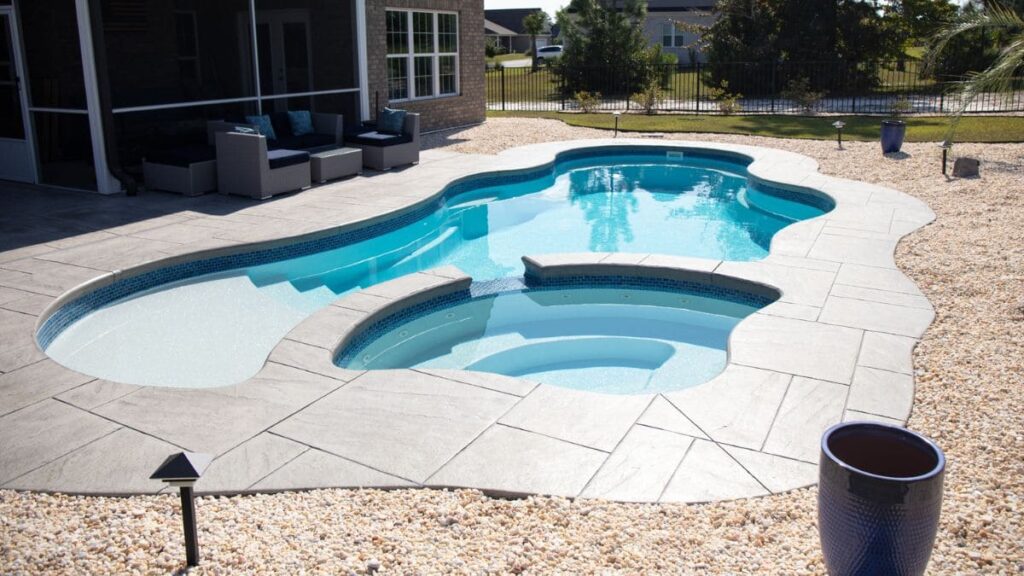
Maintenance cost: $85 to $170 per month ($1,000 to $2,000 per year)
Fiberglass pools are the easiest and least expensive to maintain. Their smooth, non-porous gel coat surface resists algae growth really well, which means you’ll be using fewer chemicals and spending less time brushing it.
There’s no liner in fiberglass that you have to replace and no resurfacing required for decades with proper care. When you compare the long-term numbers, fiberglass owners consistently spend less year after year than vinyl or gunite pool owners.
Fiberglass actually wins on total cost of ownership. Compared to vinyl, the tradeoff is a higher upfront installation price but most owners recover that gap within a few years of lower maintenance bills and no liner replacement.
Gunite Pool Maintenance Cost
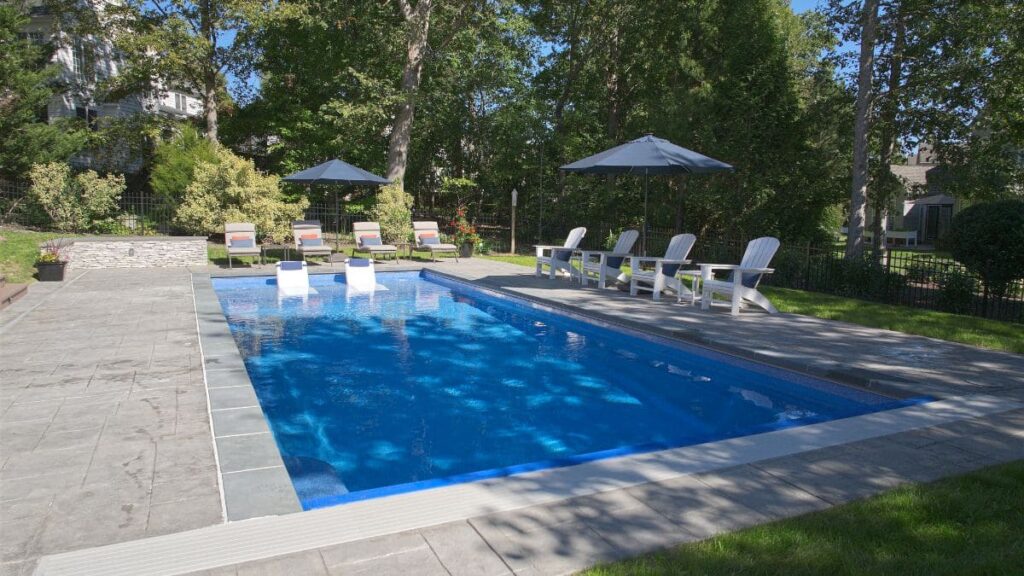
Maintenance cost: $170 to $335 per month ($2,000 to $4,000 per year)
Gunite (concrete) pools are the most expensive to maintain. Their porous surface is prone to algae growth that needs more chemicals and more frequent brushing to keep clean. They’re also prone to stubborn staining if water chemistry gets off track.
On top of routine costs, gunite pools need acid washing every 3 to 5 years to remove mineral buildup. That runs around $300 to $700 per session. And after every 10 to 20 years, the plaster surface needs full resurfacing. That can cost you $6,000 to $15,000+, depending on finish type and pool size. For more information, check out our Pool Resurfacing Cost guide.
If you want a fully custom shape and are committed to the upkeep, concrete is worth it. Just go in with eyes open on what the long-term maintenance bill actually looks like.
Not Sure Which Pool Type Costs Less to Maintain?
Get expert guidance on gunite, fiberglass, and vinyl liner before you invest.
Pool Maintenance Cost Breakdown by Service Type
Here’s where your money actually goes, broken down by each maintenance category.
| Maintenance Category | Estimated Cost |
|---|---|
| Chemical costs | $25 to $70 per month (chlorine); $10 to $25 per month (saltwater) |
| Routine cleaning (Skimming, brushing, and vacuuming) | $75 to $150 per visit |
| Equipment checks and filter maintenance | $250 to $500 per year |
| Energy and electricity | $75 to $150 per month (single-speed)$20 to $50 per month (variable-speed) |
| Seasonal opening and closing | $250 to $500 per service |
Chemical Costs
Cost: $25 to $70 per month (chlorine); $10 to $25 per month (saltwater)
Chemicals are one of the biggest recurring expenses if you own a pool. For a standard 15,000 to 20,000-gallon chlorine pool, plan on $25 to $70 per month to cover chlorine, pH adjusters, alkalinity increaser, shock treatments, and algaecide.
Gunite pools need more chemicals because porous surfaces affect water balance faster. Heated pools also burn through chlorine more quickly.
Saltwater pools, however, cost less on chemicals, somewhere around $10 to $25 per month, because the salt cell generates chlorine automatically. The catch is that salt cells cost $500 to $800 to replace every 3 to 6 years.
Pro tip: Buying chemicals in bulk from a pool supply store saves 20 to 30% compared to big-box hardware stores.
Routine Cleaning (Skimming, Brushing, and Vacuuming)
Cost: $75 to $150 per visit
Weekly cleaning includes:
- Skimming debris from the surface
- Brushing the walls and floor to break up algae before it takes hold
- Vacuuming the pool floor
- Checking water clarity
- Emptying skimmer baskets
A professional cleaning runs $75 to $150 per visit, or $120 to $500 per month on a regular service plan.
Concrete pool owners need to brush 2 to 3 times a week because the porous surface allows algae to root faster. Similarly, pools surrounded by trees need more frequent cleaning as leaves, pollen, and debris clog filters faster.
Equipment Checks and Filter Maintenance
Cost: $250 to $500 per year (major repairs are additional)
Your filter, pump, and circulation system are the heart of the pool. Cartridge filters need a deep clean 4 to 8 times per year. Sand filters need backwashing and last 5 to 7 years before needing replacement (costs around $200 to $400). DE filters need fresh diatomaceous earth each season, adding $30 to $60 per year to total price.
Beyond the filter, a pump replacement runs $2,000 to $4,000 and a heater repair costs around $150 to $750.
Catching these problems early through regular equipment checks is the key. It will almost always cost less than reactive repairs.
Energy and Electricity Costs
Cost: $75 to $150 per month (single-speed); $20 to $50 per month (variable-speed)
Your pool pump is the biggest energy user. Running a single-speed pump 8 to 12 hours a day adds $75 to $150 per month to your electricity bill.
A variable-speed pump running at lower RPMs costs $20 to $50 per month, and the Department of Energy estimates the savings can exceed $800 per year compared to older single-speed models.
Heated pools increase your bills even more. A gas heater can add $200 to $600 per month when used regularly. A heat pump costs $50 to $150 per month. So if heating is a priority, build it into your budget from day one.
Seasonal Opening and Closing
Cost: $250 to $500 per service
Opening and closing the pool can cost you $250 to $500 per service. Opening involves restarting equipment, removing the cover, balancing chemistry, and an initial shock treatment. Closing requires winterizing equipment, blowing out the lines, and covering the pool.
In warmer climates like Florida, Texas, and Arizona, many homeowners skip a formal closing and run the pool year-round. This removes the closing cost but keeps the chemical and electricity spend elevated through winter.
Factors That Affect Pool Maintenance Cost
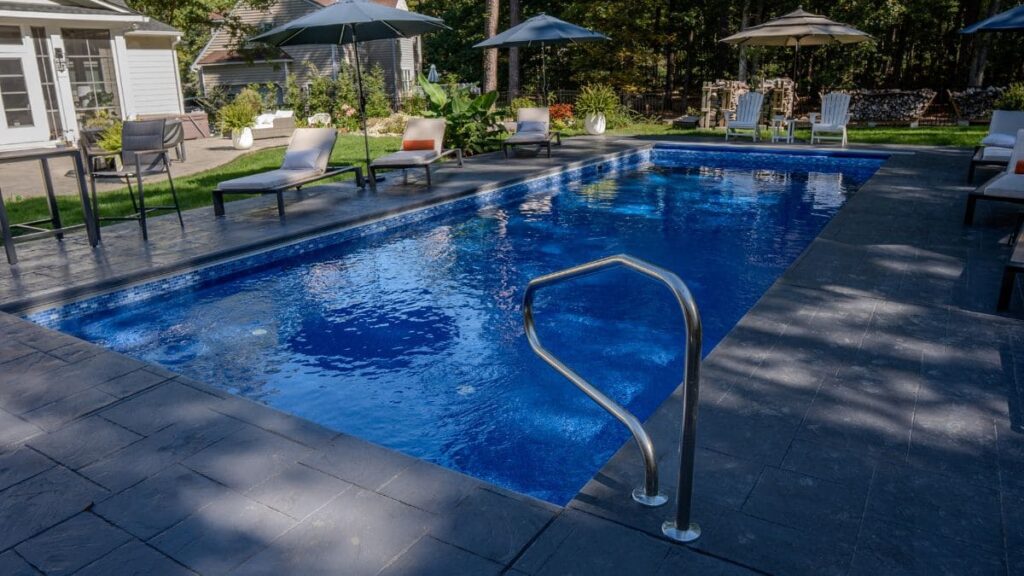
No two pools cost the same to maintain. Here are some factors that affect how much you’ll spend throughout the year:
- Pool size: A 10,000-gallon pool uses roughly half the chemicals of a 20,000-gallon pool. Bigger pools need more powerful pumps, larger filters, and more weekly cleaning time. Every cost scales with water volume.
- Usage frequency: A pool used daily needs more frequent chemical adjustments, more shocking after heavy bather loads, and more debris cleanup. A pool that sits unused for weeks can develop algae blooms that cost $300 to $500 to clear. That’s more than you’d spend on weeks of preventive service.
- Climate and location: Hot, humid climates burn through chlorine quickly, especially in summer, and also grow algae faster. And pools near trees need more skimming and filter cleaning.
- Pool features and add-ons: Waterfalls, spas, and fountain attachments deplete chemicals faster through aeration. Heaters, automation systems, and LED lighting all draw electricity and require their own maintenance, adding to your monthly operating cost.
- Pool coverage: Pools without a cover lose more water through evaporation and collect more debris.
DIY Pool Maintenance vs. Hiring a Professional
| Category | DIY | Professional |
|---|---|---|
| Monthly cost | $80 to $150 (chemicals + supplies) | $120 to $500 |
| Annual cost | $1,000 to $1,800 | $1,500 to $6,000 |
| Startup tools | $200 to $400 (one-time) | None |
| Time required | 2 to 4 hours per week | None |
| Best for | Budget-conscious owners, simpler pools | Busy homeowners, complex pools |
Going the DIY route means a one-time investment of $200 to $400 for tools. You’ll need a skimmer, wall brush, vacuum, and a water testing kit. After that, your monthly spend stays at $80 to $150 for chemicals and supplies. Over 5 years, that may look something like $2,500 to $9,000 in savings compared to a full-service weekly contract.
The tradeoff here is time and a learning curve. Plan on 2 to 4 hours per week during swim season. Like most owners, you will get the hang of water chemistry within a month or two.
Professional service gives you more flexibility. In that, a chemical-only plan runs $80 to $120 per month while you handle the physical cleaning yourself.
Full weekly service that includes chemicals, skimming, brushing, vacuuming, equipment checks runs $120 to $500 per month. We recommend a hybrid approach to balance cost and convenience for you.
Choose a Pool That Fits Your Budget
Learn how maintenance costs differ between fiberglass, vinyl liner, and gunite pools.
FAQs
How much does pool maintenance cost per month?
Most homeowners spend $120 to $500 per month on professional pool maintenance. The exact cost depends on pool size, equipment, location, and whether the pool is heated. DIY maintenance can reduce costs to around $80 to $150 per month.
What is the cheapest pool to maintain?
Fiberglass pools cost the least to maintain long-term, around $1,000 to $2,000 per year total. Their non-porous surface resists algae. There’s no liner to replace, and the surface doesn’t need resurfacing for decades.
Are saltwater pools cheaper to maintain?
Month to month, yes. Saltwater pools run about $10 to $25 per month in chemicals versus $25 to $70 for a traditional chlorine pool. But the salt cell costs $500 to $800 to replace every 3 to 6 years, and equipment can corrode faster if not managed properly. The total long-term cost is closer than the monthly number suggests.
How often should I clean my pool?
Skim the surface and test water chemistry at least once a week. Brush the walls and vacuum the floor weekly as well. If you have a concrete pool, brush 2 to 3 times a week since the porous surface lets algae root much faster. Clean the filter every 1 to 3 months depending on your filter type and how much the pool gets used.
Do pools increase electricity bills?
Yes. A single-speed pump running 8 to 12 hours a day adds $75 to $150 per month to your electric bill. Switching to a variable-speed pump drops that to $20 to $50 per month. Heaters, lights, and automation add to the total but represent a smaller share of overall energy use.
How to Keep Pool Maintenance Costs Under Control
The most expensive pool problems (algae blooms, equipment failures, surface damage) almost always start with neglect. So you need to stay consistent with weekly cleaning and water testing to prevent almost $300 to $500 on algae treatments and $2,000 to $4,000 on pump replacements after skipping a few weeks.
What you can do is get these two upgrades, they’ll pay for themselves fast. First, a variable-speed pump that’ll cut your electricity bill by $100 or more per month, and second, a pool cover that will reduce chemical loss from UV exposure and keeps debris out between swims.
In warm climates where your pool runs year-round, those two investments alone can save $1,000 to $2,000 annually.
Ready to add a pool to your backyard? Get a free quote from Luxury Pools Guide and find out what an inground pool costs to install and maintain in your area.
Start Planning Your Pool Project
Every pool is different. Get pricing tailored to your property and goals.