Choosing between a gunite and fiberglass pool comes down to what you want from your backyard. Both are solid options for homeowners from the Mid-Atlantic region, Southeast to Texas to the Southwest, but they fit different budgets, timelines, and long-term goals.
If you want a fully custom luxury pool with unlimited design options, gunite is the better choice. If you’d rather get your pool installed faster with less upkeep, fiberglass offers a simpler path to enjoying your backyard.
Quick Answer: Gunite vs. Fiberglass Pool
Choose a gunite pool if your priority is a fully customized backyard. Choose a fiberglass pool if you want a faster installation and less maintenance after it’s built.
If you’ve been dreaming about a one-of-a-kind pool with custom features, gunite gives you the most freedom. If you’d rather spend less time maintaining your pool and get it swimming-ready sooner, fiberglass is hard to beat.
Here’s a side-by-side comparison to help you decide.
| Feature | Gunite Pool | Fiberglass Pool |
|---|---|---|
| Best for | Custom designs, long-term homeowners, estate backyards | Low maintenance, fast installation, long-term homeowners, luxury backyards |
| Installed cost | $50,000 to $200,000+ | $50,000 to $175,000+ |
| Active construction time | 3 to 6 months | 4 to 8 weeks |
| Maintenance | Requires regular brushing, chemical balancing, and resurfacing over time | Smooth surface resists algae and needs less routine maintenance |
| Customization | Nearly unlimited shapes, sizes, depths, and built-in features | Limited to pre-manufactured shapes and sizes |
| Lifespan | 50+ years with proper maintenance | 25 to 30+ years with proper maintenance (some manufacturers’ shells last 50+ years) |
| Surface feel | Textured finish that varies by plaster, quartz, or pebble coating | Smooth, comfortable surface that’s gentle on feet |
The best pool isn’t the one with the longest feature list. It’s the one that fits your budget, timeline, and how you plan to use your backyard.
Design Your Dream Backyard
See what’s possible with a custom gunite pool or discover fiberglass models that fit your space.
What Is a Gunite Pool?

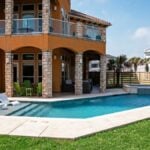
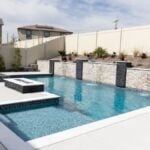
A gunite pool is an in-ground pool built on-site rather than delivered as a pre-made shell. Crews shape a steel rebar frame, spray it with a concrete mixture, and then apply a finish such as plaster, quartz, or pebble to create the final surface.
If you want complete control over your pool’s shape, size, depth, and features, gunite gives you the most flexibility. It’s the right choice for a custom outdoor living space with features like tanning ledges, spas, waterfalls, or a design that has to work around an awkward lot.
What Is a Fiberglass Pool?
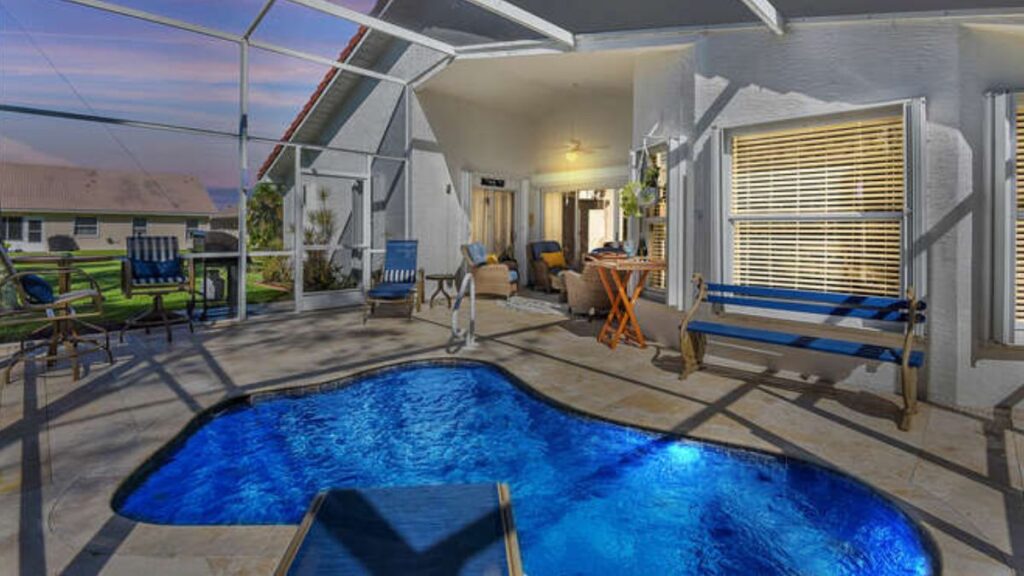
A fiberglass pool is a one-piece shell that’s built in a factory and delivered to your property for installation. Once the excavation and base are ready, the shell is lowered into place, connected to the plumbing, and backfilled to complete the installation.
If your goal is getting a pool in the ground quickly with less maintenance, fiberglass is a practical option. The smooth, non-porous surface resists algae growth, needs fewer chemicals, and makes routine cleaning much easier than a concrete pool.
Gunite vs. Fiberglass Pool Cost
Owning a pool means budgeting for more than the installation price. You’ll also plan for water care, equipment, seasonal service, and repairs over the life of the pool, so it helps to compare total ownership cost, not just the upfront number.
Nationally, gunite pools run $50,000 to $200,000 or more, and fiberglass pools run $50,000 to $175,000 or more. Where you land in that range depends on location, size, features, site conditions, and finish choices.
Pricing flips depending on your region. In Southern, Southwestern, and Western markets, gunite tends to cost the same or even less than fiberglass, because labor and material costs are lower there. In Mid-Atlantic and Northern markets, higher labor costs push gunite above fiberglass.
If you’re comparing prices for your specific area, our cost guide breaks this down by region, and your local page has market-specific numbers.
Gunite pools need resurfacing every 10 to 15 years, which adds to lifetime cost. Fiberglass pools skip resurfacing but may need gel coat repairs if the surface gets damaged. On top of installation, plan on $1,800 to $6,000 per year for chemicals, electricity, and routine service on either pool type. DIY maintenance keeps that number toward the lower end.
Over a 10-year window, gunite costs more to maintain than fiberglass because of the brushing, chemical use, and periodic resurfacing the plaster surface requires. That gap is worth factoring in alongside the upfront price when you’re comparing total cost of ownership.
Not Sure Which Pool Fits Your Budget?
Compare gunite and fiberglass options with a personalized estimate based on your yard, goals, and budget.
Design and Customization
Winner: Gunite
Gunite gives you full control over the design. You can shape it to fit the yard, add deep ends, vanishing edges, raised spas, beach entries, tanning ledges, and work around tight or irregular lots without compromise.
Fiberglass still looks clean and modern, but you’re choosing from pre-made molds. It works best when a standard shape fits your space. You won’t get the same freedom to customize depth, layout, or built-in features.
Installation Timeline
| Project Phase | Gunite Pool | Fiberglass Pool |
|---|---|---|
| Planning and design | 1 to 3 weeks | 1 to 3 weeks |
| Permitting | 2 to 20 weeks | 2 to 20 weeks |
| Excavation | 2 to 5 days | 2 to 5 days |
| Pool Construction | 12 to 20 weeks | 4 to 8 weeks |
| Water fill and start up | 14 to 28 days | 3 to 7 days |
| Typical total project | 4 to 8 months | 2 to 4 months |
Permitting is usually the biggest wildcard for both pool types, not the construction itself. Municipal review alone can take anywhere from 2 weeks to 5 months depending on where you live, and that timeline runs independent of whether you’re building gunite or fiberglass. See our full installation process guide for a phase-by-phase breakdown.
A few factors that can extend either timeline:
- Florida coastal permitting: Projects near the coast require additional environmental and local permit reviews before construction begins.
- HOA approval: Many neighborhoods require design approval before permits or excavation can move forward.
- Rain delays: Heavy rain can stop excavation, concrete work, and grading until the site dries out.
- High water tables: Common in many parts of Florida, groundwater may require dewatering or extra site preparation before installation.
- Tight backyard access: Limited space can slow excavation or require smaller equipment and crane planning, especially for fiberglass shell delivery.
- Virginia, North Carolina, and Tennessee seasonal planning: Starting construction during warmer, drier months helps reduce delays from freezing temperatures and extended wet weather.
Maintenance and Cleaning
Winner: Fiberglass
Gunite pools need more hands-on maintenance because the textured plaster surface gives algae more places to grow. Expect to brush the walls regularly and plan for resurfacing every 10 to 15 years to keep the finish in good shape.
Fiberglass pools are easier to clean because their smooth, nonporous surfaces resist algae growth and wipes down faster. If you want to spend less time brushing and use fewer chemicals to keep the water balanced, fiberglass is the lower-maintenance choice.
Lifespan, Durability, and Cracking Risk
Winner: Gunite
Gunite pools are built to last for decades. The concrete shell handles heavy use well, and with proper care, a gunite pool can last 50 years or more. The tradeoff is that the finish wears over time, so plan on resurfacing every 10 to 15 years to keep it structurally sound and looking fresh.
Fiberglass pools last 25 to 30 years or more with proper care, and some manufacturers’ shells are rated to last 50 years or longer. The shell resists corrosion and everyday wear, and because fiberglass flexes slightly, it holds up well when the ground shifts.
Comfort and Surface Feel
Winner: Fiberglass
Gunite pools can have a noticeably textured surface, especially with standard plaster finishes, so swimmers may notice it on their feet and elbows during long stretches in the water. Upgraded finishes improve slip resistance and feel, but that’s a tradeoff, not a straight upgrade.
Pebble, the most popular premium finish, can feel rougher underfoot than standard plaster, while quartz lands somewhere in between. Whatever you choose, it adds to the overall project cost.
Fiberglass pools have a smooth, nonporous surface that feels comfortable from day one and is gentle on bare feet and skin. If your family plans to spend hours swimming, playing, or lounging on tanning ledges, fiberglass offers a more comfortable everyday experience.
Resale Value
Both pool types can add value to a home, but they tend to appeal to different buyers. A well-designed gunite pool with custom features reads as a higher-end amenity in real estate listings, especially in luxury markets where buyers expect a resort-style backyard.
Fiberglass pools can still boost resale value, particularly for buyers who care more about low maintenance than custom design. In practice, the pool’s condition, the quality of the surrounding hardscape, and how well it fits the property matter more to resale value than the material alone.
What About Vinyl Liner?
Gunite and fiberglass aren’t the only inground pool options. Vinyl liner pools use a steel or polymer frame fitted with a custom-cut liner, and they cost less upfront than either gunite or fiberglass.
The catch is that liners wear out every 7 to 10 years and need replacing, which adds to long-term cost.
Which Pool Type Is Better for Your Backyard?
Use these as a starting point, not a final answer. Every backyard is different, and a builder who’s walked your property will give you a more precise recommendation.
Choose gunite if:
- You want a specific shape, depth, or feature that doesn’t exist in a standard mold
- You’re planning to stay in the home long-term and want to maximize backyard value
- You want an integrated spa, vanishing edge, beach entry, or similar custom feature
- You’re comfortable with a longer construction timeline and more ongoing maintenance
Choose fiberglass if:
- You want to be swimming sooner rather than later
- You’d rather spend less time and money on ongoing maintenance
- A standard rectangular, freeform, or kidney shape works for your yard
- You want a smooth, consistent surface without the added cost of premium gunite finishes
Gunite vs. Fiberglass by Region
Florida: Gunite is a strong choice if you want custom features like raised spas, sun shelves, or infinity edges, and lower regional labor costs keep it competitive with fiberglass. Fiberglass is ideal if you want faster installation. High water tables, coastal permitting, and frequent rain can slow both, but gunite typically needs more site prep during construction.
Virginia, North Carolina, and Tennessee: Both pool types perform well. If you want a fully custom design, gunite is worth the tradeoff. If you want a quicker build and lower maintenance, fiberglass fits better.
South Carolina and Alabama: Warmer weather keeps construction timelines closer to the shorter end for both pool types. Gunite remains the top choice for custom coastal or resort-style backyards, while fiberglass suits homeowners prioritizing speed and simplicity.
Texas: Corpus Christi, San Antonio, Austin, and Houston all benefit from lower regional labor costs, which narrows the price gap between gunite and fiberglass more than in most other states. Texas lots also tend to be larger, so gunite’s ability to handle custom shapes and bigger layouts gets used often. Fiberglass still holds up as the faster, lower-maintenance option for homeowners who’d rather skip the extended build timeline.
Arizona and California: In Phoenix, Temecula, and San Diego, both pool types are common. Gunite tends to dominate in high-end backyard renovations because of the region’s strong culture around custom outdoor living spaces, while fiberglass appeals to homeowners who want to get in the water fast with minimal upkeep.
Final Recommendation
There isn’t a universal winner because the right pool depends on what matters most to you. Choose gunite if your priority is a fully custom luxury pool with unique shapes and premium features. Choose fiberglass if you want a faster installation, lower maintenance, and more predictable long-term ownership costs.
Still deciding? Take the Pool Type Quiz to compare your options. Ready to move forward? Schedule a free consultation with your local team.
FAQs
Can fiberglass pools have tanning ledges or spas?
Yes, many fiberglass models include built-in tanning ledges, benches, and spa options. Available features depend on the manufacturer’s mold, so customization is more limited than with gunite.
Can you convert a fiberglass pool to gunite, or vice versa?
No. Fiberglass pools are a single molded shell, and gunite pools are built in place from concrete. Converting one to the other means fully removing the existing pool and starting over, which is a major renovation, not an upgrade. If you’re unsure which type fits your yard, it’s worth deciding before construction starts.
Which pool type has a better warranty?
Fiberglass usually wins here. Most manufacturers offer a structural warranty on the shell running 25 years to lifetime, plus a separate 7 to 15 year surface warranty. Gunite pools don’t have a manufacturer warranty since they’re built on-site, so you’re relying on your builder’s workmanship warranty instead.
Which pool type is safer for kids or first-time swimmers?
Both can be built with safety features like tanning ledges, shallow entries, and non-slip surfaces. Fiberglass’s smooth gel coat is gentler on bare feet, while gunite’s textured finish offers more grip. Neither is inherently safer. The bigger factors are fencing, supervision, and proper pool alarms.
Can you expand or resize a pool after it’s built?
Gunite can sometimes be extended or reshaped during a renovation, since it’s poured concrete that a builder can modify. Fiberglass shells are fixed at the factory and can’t be resized once installed. If you think you might want to expand later, gunite gives you that option.
Which pool type is better for a small or irregularly shaped backyard?
Gunite adapts to almost any lot since it’s shaped on-site, which makes it the better fit for tight, narrow, or unusually shaped yards. Fiberglass comes in fixed shapes and sizes, so it works best when a standard mold actually fits your available space.
Are fiberglass pools cheaper than gunite pools?
It depends on your region. In Mid-Atlantic and Northern markets, fiberglass usually costs less. In Southern, Southwestern, and Western markets, gunite can cost the same or less due to lower regional labor costs. A fully loaded fiberglass pool with a spa and premium decking can end up costing about the same as a basic gunite build.
Ready to Build Your Perfect Pool?
Get expert help comparing gunite and fiberglass, plus a free, no-obligation estimate.