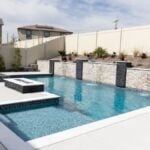
Tile is the one finish everyone touches, sees up close, and judges your pool by. Pick the wrong tile and your pool looks dated in five years. Pick the right one and it still looks sharp in twenty!
This guide breaks down 21 pool tile ideas by where they go and what job they do, from waterline bands to full mosaic art walls. Use it to figure out what fits your pool, your budget, and the look you’re after.
Before You Choose Pool Tile, Decide Where It Will Go
Tile is one of the line items that swings your inground pool cost the most. So you need to pick it wisely. Most of us start by picking a color. Start with location instead. Where tile goes changes what it needs to do and how much it costs.
- Waterline tile: A 6-inch band where the water meets the wall. Every plaster or pebble pool needs it. It stops the “bathtub ring” from sunscreen, body oil, and minerals. Budget $15 to $20 per linear foot for an accent band.
- Spa tile: Spas run hotter and get more direct contact from bathers. Tile here needs to handle heat and stay comfortable underfoot.
- Step markers: A stripe or contrast tile on the edge of steps and benches. This is a safety feature first, a design detail second.
- Tanning ledge accents: Ledges sit in shallow water and full sun. Tile here shows off more than a waterline band because you can see the whole surface.
- Raised walls: Spa dam walls, water feature walls, and seat walls that sit above the water. These are prime spots for a statement tile since they’re visible from every angle.
- Water features: Sheer descents, bubblers, and spillways. Tile behind moving water catches light differently than tile underwater.
- Full pool interior: Tiling the entire shell instead of just the waterline. This is the most expensive option and the most luxury, at $50 to $70 per square foot, or $50,000 to $70,000 on a 1,000-square-foot pool.
- Exterior pool walls: The outside face of a raised pool, visible from the patio. This tile has to match your outdoor living space, not just the water.
Once you know where you’re tiling, the color and material decisions get a lot easier. If you’re still deciding on a shape, check inground pool types first, as it affects how much waterline you’ll actually be tiling.
Pool Tile Ideas That Make the Water Look Better

Tile color changes how the water reads, even with the same plaster or pebble finish underneath. Here are five ideas built around that effect.
1. Classic Blue Waterline Tile
A bright blue waterline band is the tile equivalent of a white picket fence. It’s familiar, it works with almost any backyard, and it reads as “pool” the second you see it. It’s also the safest resale choice. Buyers don’t second-guess a classic blue band the way they might a bold pattern.
2. Pale Blue Mosaic Tile
Small-format pale blue mosaic softens the waterline instead of drawing a hard line around the pool. The tiny grout lines catch light and give the band texture instead of one flat color.
This works well on freeform pools where you want the edges to feel less stiff.
3. Deep Blue Glass Tile
Deep blue glass tile adds depth you don’t get from ceramic or porcelain. Glass reflects light instead of just absorbing color, so the waterline actually looks like it has dimension.
It’s a higher price point, but it’s the tile most likely to make a plain rectangular pool look custom.
4. Teal or Green Pool Tile
Teal and green waterline tile push the water color toward turquoise, even in a plaster pool with a standard white or light gray finish. It’s the closest you’ll get to a tropical resort look without a full pebble or quartz interior upgrade.
This pairs well with lush landscaping and lagoon-style pool shapes.
5. Dark Pool Tile for a Reflective Look
Charcoal, black, and dark gray waterline tile turn the pool into a mirror. At night, with landscape lighting, dark tile makes the water look bottomless. Dark tile shows water spots and calcium scale faster than light tile, so it needs more regular brushing to stay sharp.
Find the Perfect Tile for Your Pool
Compare colors, materials, and finishes to create the look you want for your pool.
Pool Tile Ideas for Luxury Features

Once the basic waterline is covered, tile becomes the tool you use to dress up the features that separate a standard pool from a custom one.
6. Tanning Ledge Accent Tile
A border tile around the edge of a tanning ledge frames the shallow water and makes the ledge look intentional instead of like a step that never ends. Pair it with a contrast color from the main waterline for a defined look.
7. Spa Waterline Tile
Spa tile should match or complement the pool’s waterline, but it’s worth stepping up the material here. Bathers sit closer to spa tile than pool tile, so texture and color read more clearly. Glass or a richer mosaic in the spa is a small upgrade in square footage that makes a big visual difference.
8. Raised Spa Wall Tile
A raised spa dam wall is one of the biggest visible tile surfaces in the whole project. This is where a lot of builders go bold, since the wall is seen dry as much as it’s seen wet. Full mosaic coverage or a patterned band on a raised spa wall is one of the fastest ways to make a pool look custom-built.
9. Step and Bench Tile Markers
A contrast-color strip along the edge of every step and bench is both a safety marker and a design line. It helps swimmers see the step edge underwater, especially in the evening. Most pool codes expect some form of step marking, so this isn’t just a style choice.
10. Tile Around Bubblers or Water Features
Bubblers, deck jets, and spillways look better with a tile surround instead of plain plaster or coping. The tile gives moving water something to catch light against, and it protects the surface from constant splash wear.
Make Your Pool Look Custom-Built
Choose the right tile for your spa, water features, steps, and other standout details.
Statement Tile Ideas for Custom Pools

These ideas move tile from “finish” to “feature.” They cost more in labor because of the layout work, but they’re what people remember about a pool.
11. Greek Key Border Tile
A Greek key or fret pattern along the waterline is a classic Mediterranean and resort-style detail. It reads as high-end without needing bright colors or unusual materials.
12. Geometric Pool Tile
Chevron, herringbone, and hexagon patterns bring a modern edge to waterline bands, step markers, or raised walls. This works especially well on contemporary pools with clean lines and minimal landscaping.
13. Medallion or Mosaic Floor Accent
A medallion set into the pool floor, usually near the steps or the center of a shallow area, is a full custom feature. Think of it as an area rug for the pool floor.
This only works on fully tiled pools or pools with a plaster/pebble floor built to hold a floor insert.
14. Black and White Tile Detail
A black and white waterline, whether it’s a checkerboard, a simple two-tone stripe, or an alternating pattern, gives a pool a classic country club look. It photographs well and works with both traditional and modern architecture.
15. Custom Mosaic Art
A hand-set mosaic image (a compass rose, a family crest, a coral reef scene) on a pool floor or wall is the highest-end tile option on this list. It’s built tile by tile, so pricing and lead time run well above standard waterline work. Custom mosaic work is priced by the hour of hand-setting, so see our installation process guide for how that fits into the build timeline.
Tile Ideas for Raised Walls and Outdoor Living Spaces

Raised walls sit above the water and stay dry most of the time, so tile here gets judged like a piece of the patio, not like a pool finish.
16. Tile on a Raised Pool Wall
A fully tiled raised wall, whether it’s a seat wall or a retaining wall, adds texture to the backyard even when nobody’s swimming. Stone-look porcelain or a warm mosaic works well here since the wall reads as part of the hardscape.
17. Tile Behind a Water Feature
Tile set behind a scupper, spillway, or waterfall wall gives moving water a backdrop. Dark or textured tile makes the water itself stand out more, since it creates contrast against the surface.
18. Tile on an Exterior Pool Wall
The outward-facing wall of a raised pool is visible from the patio and the house, not just from inside the water. Matching this tile to your home’s exterior stone or brick ties the whole backyard together.
19. Matching Tile With Outdoor Kitchen or Patio Finishes
Repeating a tile pattern or material from the pool on an outdoor kitchen backsplash, fire feature, or serving counter front makes the whole backyard feel designed as one project instead of pieced together over time.
Softer, More Natural Pool Tile Ideas

Not every pool should look glossy and reflective. These two ideas trade shine for texture and warmth.
20. Stone-Look Porcelain Tile
Porcelain tile made to look like travertine, slate, or limestone gives you the natural stone look with better chemical and water resistance than real stone. It holds up well against pool chemicals and keeps its texture and color over time, without the sealing that natural stone needs.
21. Earth-Tone or Handmade-Look Tile
Warm tans, terracottas, and tiles with a slightly irregular, handmade look soften a pool that might otherwise feel stark. This pairs well with Mediterranean, Spanish, and desert-modern landscaping.
How to Choose the Right Pool Tile Color
Color sets the tone for the whole pool before you even factor in shape or landscaping. Here’s what each range communicates:
| Tile Color | Look and Feel |
|---|---|
| Bright blue | Classic, clean, family-friendly |
| Deep blue | Luxury, dramatic, resort-style |
| Green/teal | Natural, tropical, calming |
| White/light tile | Bright, reflective, modern |
| Black/dark tile | Sleek, dramatic, reflective |
| Earth tones | Warm, natural, Mediterranean |
Match the tile to how you’ll actually use the pool. A family pool that gets daily use holds up better with a mid-tone color that hides water spots. A pool built mainly for entertaining at night can lean darker, since landscape lighting does a lot of the work.
Whichever you pick, waterline tile is normally redone as part of a resurfacing job rather than on its own, which for a gunite pool comes around every 10 to 25 years depending on the interior finish. See pool resurfacing cost for what that job runs.
Choose Pool Tile That Looks Great for Years
Get help selecting the right color, material, and finish for your pool and backyard.
Pool Tile Mistakes to Avoid
- Skipping pool-rated tile. Bathroom or kitchen tile isn’t built for constant water, UV, and chemical exposure. It will fail early.
- Choosing glass tile without a qualified installer. Glass tile installation takes more time and skill than ceramic or porcelain. A bad install shows up as hollow spots and cracked grout within a year or two.
- Ignoring slip resistance on steps and ledges. Glossy tile looks great but can be dangerous on wet, sloped surfaces.
- Matching tile to the pool but not the house. A tile that looks great in the water can clash with your patio, coping, or home exterior.
- Going too dark without checking maintenance. Dark tile shows scale and water spots fast. Be ready to brush more often.
- Underestimating cost on full mosaic or custom art. Hand-set work is priced very differently from standard tile, so budget extra time and money if you’re going custom.
- Forgetting grout color. Grout that’s too light stains fast in a pool environment. Darker, pool-rated grout usually holds up better.
Ready to pick your tile? The right tile comes down to where it’s going, how it holds up in your climate, and how much of the pool you want it to cover. If you’re still weighing options, connect with your local team for a recommendation based on your pool type, your budget, and the look you’re after.
FAQs
What type of tile is best for pools?
Porcelain and glass are the two most common choices for pool-rated tile. Porcelain costs less and holds up well structurally. Glass costs more but gives you a reflective, higher-end look and resists staining and chemical damage better over time.
What color pool tile makes water look blue?
Blue, teal, and deep navy waterline tile all push the water toward a bluer or more turquoise tone, even with a standard white or light plaster finish underneath.
Is glass tile good for pools?
Yes. Glass tile is non-porous, resists fading and chemical damage, and can last decades with a proper installation. The tradeoff is cost, since glass runs higher than ceramic or porcelain and needs a specialized installer.
Should pool tile match the coping?
It doesn’t have to match exactly, but it should coordinate. Many builders pair a lighter coping with darker waterline tile, or a stone-look coping with earth-tone tile, so the two finishes complement each other instead of competing.
Is pool tile included in a standard pool quote, or is it extra?
Basic waterline tile is usually included in a standard quote as part of the interior finish. Upgraded materials like glass, full mosaic coverage, or a fully tiled shell are almost always priced as an add-on, so confirm exactly which one your quote covers before you compare bids.
What pool tile looks most luxury?
Glass tile, full mosaic coverage, and custom mosaic art rank as the highest-end options. Deep blue or dark glass waterline tile paired with a tiled raised spa wall is one of the most common combinations in luxury builds.
Get Your Pool Tile Right the First Time
Get expert guidance on tile selection, installation, and the right finish for your pool.