If you are planning to build a swimming pool in Jacksonville, you will need a building permit before construction begins. The city reviews your plans to confirm the pool meets zoning, setback, safety, electrical, and plumbing requirements, and skipping this step can lead to costly delays, fines, or stop-work orders.
This guide explains who handles the permit, what Jacksonville reviewers check before approval, the documents you will need, required safety rules, common permit delays, and the questions to ask your pool builder, so your project stays on track from application to final inspection.
Do You Need a Permit for a Swimming Pool in Jacksonville?
Yes, you need a building permit before installing a permanent swimming pool in Jacksonville, whether it is concrete, fiberglass, or vinyl. Your inground pool type changes the construction plans the city reviews, not whether you need a permit. The permit allows the city to review your plans for code compliance and setbacks before construction begins.
It also covers electrical and plumbing work, as well as the safety barriers required to protect the pool area. Each pool or spa needs its own separate permit, submitted through the city’s online portal, JAXEPICS.
If your total job cost exceeds $5,000, which covers most inground pool projects, you will also need a recorded Notice of Commencement before the city will schedule an inspection. Nearly every build clears that threshold, as our inground pool cost guide shows.
If you are hiring a licensed pool contractor, they will normally handle the permit process for you, but it is worth confirming that the permit has been approved before any digging starts.
Planning a Pool? We’ll Handle the Permit Process
From permit applications to final inspections, our team helps keep your Jacksonville pool project moving.
Who Handles the Pool Permit: Homeowner or Pool Builder?
In most Jacksonville pool projects, a licensed pool contractor handles the permit application, but every homeowner should understand who’s responsible and never agree to pull a permit for someone else.
When a Homeowner May Pull a Permit
Jacksonville allows homeowners to apply for an owner-builder permit if they meet the city’s requirements and plan to take responsibility for the project.
That means you are responsible for hiring and supervising the work, scheduling inspections, and making sure the pool meets all applicable codes.
You should never pull a permit on behalf of a contractor who asks you to do it to avoid licensing or permit requirements. If a contractor pressures you to sign as the owner-builder when they are actually running the project, treat it as a warning sign and choose another company.
Why Most Homeowners Should Use a Licensed Pool Contractor
A licensed pool contractor understands Jacksonville’s permit requirements and knows what documents the city expects before approving the project. They coordinate permits, inspections, and code requirements, helping keep construction moving without unnecessary delays.
Experienced contractors also catch issues with setbacks, drainage, or equipment placement before they become expensive problems.
Before signing a contract, confirm that the contractor will pull the permit under their license and provide you with the approved permit information before work begins.
What Jacksonville Authorities May Review Before Approving a Pool Permit?
Before approving your pool permit, Jacksonville reviewers review your plans to confirm the pool fits your property, complies with local development rules, and won’t create safety or construction problems later.
- Property address and real estate number: The city verifies the property’s address and parcel information to make sure the permit is tied to the correct lot before the review begins.
- Zoning: Reviewers verify that your property’s zoning permits a residential swimming pool and that the proposed location complies with local development standards.
- Setbacks and distance from property lines: Reviewers confirm the pool is set back the required distance from property lines and other protected areas, so it complies with setback requirements.
- Lot coverage: If your property has limits on how much of the lot can be covered by structures or improvements, the pool and surrounding deck are reviewed to make sure they stay within those limits.
- Site plan or survey: Your application should include a clear site plan or recent property survey showing the house, pool, equipment pad, fences, easements, and property lines. Accurate measurements help prevent delays during the review.
- Easements and drainage: Utility and drainage easements must remain accessible, so the city checks that the pool, deck, and equipment won’t block areas reserved for utilities or stormwater management.
- Septic or utility conflicts: If your home uses a septic system or has underground utility lines near the proposed pool, reviewers look for conflicts that could require changes before the permit is approved.
- Flood zone requirements: If your property is in a flood zone, your pool plans must demonstrate that the design can withstand flood-related loads in accordance with the applicable flood provisions.
- Protected trees: If a tree on your lot meets the city’s protected size threshold, its removal or protection during construction may need to be addressed as part of the review.
- Historic district status: If your property is in a designated historic district, you may need a Certificate of Appropriateness before the pool permit can move forward.
- HOA or deed restrictions (where applicable): The city does not enforce private HOA rules, but your neighborhood may require separate architectural approval. If your community has deed restrictions or an HOA, get that approval before construction to avoid problems after your permit is issued.
Documents and Forms to Ask Your Pool Builder About
Before construction starts, ask your pool builder to walk you through the paperwork so you know what is being submitted, who is responsible for each document, and whether anything still needs your signature.
| Item | Why it matters | Who usually provides it |
|---|---|---|
| Pool permit application | Starts the permit review and provides the project details that the city needs to evaluate the pool. | Licensed pool contractor |
| Permission by Owner to Obtain Permit | Authorizes the contractor to pull the permit under their license on your behalf. | Homeowner, signed for the contractor |
| Site plan or property survey | Shows the proposed pool location, property lines, setbacks, easements, and existing structures so reviewers can verify the layout. | Homeowner or survey company; submitted by the contractor |
| Pool construction plans | Includes the pool dimensions, structural details, equipment layout, and other construction information required for plan review. | Pool contractor or pool designer |
| Electrical and plumbing details | Shows how the pool equipment, wiring, grounding, and plumbing systems will be installed to meet code requirements. | Pool contractor and licensed subcontractors |
| Private Swimming Pool Safety Affirmation | Confirms that the required pool safety barriers and protection measures will be installed before the pool is used. | Homeowner and/or contractor, as required |
| Notice of Commencement (if project value requires it) | Records the project as required under Florida law for qualifying construction projects before work begins. | Property owner |
| HOA approval (if applicable) | Confirms the project meets your community’s architectural or deed restriction requirements before construction starts | Homeowner |
| Contractor license | Confirms you are hiring a properly licensed contractor to perform the work legally and protect your property. | Licensed pool contractor |
Avoid Permit Delays Before Construction Begins
We help prepare the required plans, paperwork, and permit documents so your project starts on the right track.
Pool Safety Rules That Can Affect Final Approval
Your pool is not ready for final approval until the required safety features are installed and inspected, so it is best to plan for them before construction begins rather than treat them as last-minute additions.
Under Florida law, occupying a new residential pool without at least one required safety feature installed is a second-degree misdemeanor, so this is not a step worth skipping or rushing at the end.
Florida Pool Safety Feature Options
Florida law requires new residential pools to include approved safety features that help reduce the risk of accidental drowning.
These protections can include an approved pool barrier, a safety cover that meets state requirements, exit alarms on doors and windows that provide direct access to the pool area, or a self-closing, self-latching enclosure that separates the home from the pool.
Your pool builder should explain which option fits your project and include it in the permit plans from the start. Before the final inspection, confirm that every required safety feature has been installed and is working properly.
Pool Barrier and Gate Requirements
The pool barrier is one of the first things inspectors look at during the final approval process because it helps prevent unsupervised access to the water.
The barrier must be at least 48 inches high, measured from the ground on the side facing away from the pool, with no more than a 2-inch gap at the bottom. Gates must open away from the pool area, close automatically, and latch securely so they cannot be left open by accident.
The barrier should surround the pool or provide an approved level of protection that meets Florida’s residential pool safety requirements. Before requesting the final inspection, walk the entire fence line and test every gate to make sure everything operates as intended.
What Happens After the Permit Is Submitted?
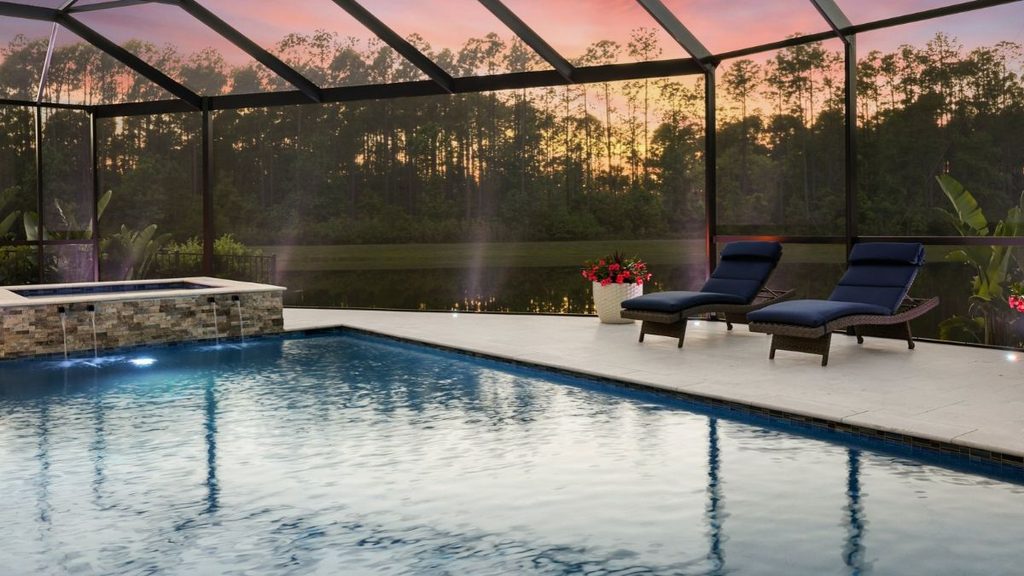
Once your permit application is submitted, the project moves through a review and inspection process before construction can be completed and approved. This runs alongside the wider pool installation process.
- Application and documents are submitted through Jacksonville’s permitting system. Your contractor uploads the required forms, plans, and supporting documents so the city can begin reviewing the project.
- The city reviews the application. Reviewers check the plans for zoning, setbacks, construction details, safety requirements, and other items needed before work can begin.
- Comments or corrections are issued if needed. If information is missing or revisions are required, your contractor updates the plans and resubmits them for another review.
- The permit is approved. Once the application meets the city’s requirements, the permit is issued, and construction can legally begin.
- The permit is posted at the jobsite. Keep the approved permit available at the property so inspectors can verify the project during construction.
- Required inspections take place. As the work progresses, inspections are scheduled at key stages to confirm that the pool is being built in accordance with the approved plans and applicable codes. It is the permit holder’s responsibility to make sure each required inspection is actually requested, so confirm with your contractor who is scheduling them and that nothing gets skipped.
- The final inspection is completed, and the permit is closed out. After all work passes inspection, the city signs off on the pool as complete, confirming it’s ready for use.
Common Pool Permit Delays in Jacksonville
Most pool permit delays in Jacksonville are not caused by the permit itself. They happen because the application is incomplete or the proposed pool layout doesn’t match the property’s requirements.
- Missing or outdated property survey: An old survey, or one that does not clearly show property lines, easements, and existing structures, can delay the review until updated documents are submitted.
- Pool placed too close to a property line or easement: If the proposed layout does not meet setback requirements or extends into a utility or drainage easement, the plans must be revised before approval.
- Incomplete construction plans: Missing structural details, equipment information, or electrical and plumbing plans often lead to review comments and resubmittals.
- Required forms not included: Omitting documents such as the Pool Safety Affirmation or other required paperwork can delay the application, even if the construction plans are complete.
- Incorrect contractor information: Permit applications should list the licensed contractor responsible for the work. Incorrect license information can stall the review until it is corrected, since the city won’t approve a permit tied to unverifiable contractor details.
- HOA approval not obtained: While the city does not enforce HOA rules, many Jacksonville neighborhoods require separate architectural approval. Starting construction before receiving HOA approval can create costly delays.
- Revisions submitted slowly: When the city requests corrections, the review doesn’t move forward until the updated plans are submitted. Responding quickly helps keep the project on schedule.
- Scheduling inspections late: After construction begins, waiting too long to request required inspections can delay the next phase of work and final approval, and may incur additional reinspection fees if work sits too long between visits.
Trust a Contractor Who Knows Jacksonville Permits
Our experienced team helps identify setback, zoning, and permitting issues before they become costly delays.
Questions to Ask Your Pool Builder Before Permitting Starts
Before your builder submits the permit application, ask these questions to ensure everyone understands the process and that there are no surprises once construction begins. For everything beyond permitting, work through our full list of questions to ask a pool builder.
- Will you pull the permit under your contractor license? Confirm that the licensed pool contractor, not the homeowner, is responsible for the permit unless you’ve chosen the owner-builder route.
- Have you checked the setbacks and easements on my property? Make sure the proposed pool location has already been reviewed against the survey to avoid redesigns later.
- What documents will you submit with the permit application? Ask for a clear list, so you know the permit package is complete before it goes to the city.
- Will you handle any correction requests from the city? Find out who will respond if reviewers ask for plan revisions or additional information.
- What pool safety features are included in the plans? Confirm that the required barrier, gate, alarms, or other approved safety measures are included in the permit package from the outset.
- Will you provide a copy of the approved permit? Ask for a copy once it’s issued so you have a record of the approved project.
- Are there any site conditions that could delay approval? An experienced contractor should identify concerns such as easements, drainage issues, utility conflicts, or septic system locations before the application is submitted.
- Do I need separate HOA approval? If your neighborhood has an HOA, ask whether additional approval is required before construction starts.
- What should I expect from permit approval to final inspection? A good contractor should explain who schedules required inspections, the major construction stages, and what you’ll need to do before the pool is ready for use.
FAQs
Do I need a permit for an inground pool in Jacksonville?
Yes. A building permit is required before installing an inground swimming pool in Jacksonville. The city reviews the project for zoning, setbacks, construction plans, electrical and plumbing work, and required pool safety features before construction can legally begin. Starting without a permit can lead to delays, fines, or corrective work.
How much does a Jacksonville pool permit cost?
Jacksonville’s base building permit typically runs $200 to $1,800 depending on your pool’s size and scope, with electrical, plumbing, and barrier permits filed separately at $50 to $300 each. Confirm current fees with the City of Jacksonville Building Inspection Division, since exact costs vary by pool size and project details.
Can I start pool construction before the permit is approved?
No. Wait until the permit has been issued before excavation or construction begins. Starting work early can result in a stop-work order, additional costs, and delays while the project is brought into compliance. Confirm that the permit has been approved before the equipment arrives at your property.
Does my pool builder handle Jacksonville pool permits?
In most cases, yes. Licensed pool contractors commonly prepare the permit application, submit the required plans, respond to review comments, and schedule inspections. Before signing a contract, confirm that the contractor will pull the permit under their license and provide you with the approved permit information.
Do I need a fence around my pool in Jacksonville?
Yes. Residential pools must meet Florida’s pool safety requirements before receiving final approval. An approved pool barrier, properly functioning self-closing and self-latching gates, or another approved safety feature must be installed as part of the project’s safety compliance before the pool can be approved for use.
Do I need HOA approval before a pool permit?
If your neighborhood has a homeowners association, you may need separate HOA approval before construction starts. The city’s permit approval does not replace your HOA’s architectural review process. Check your community’s rules early to avoid delays or disputes after your permit has been issued.
Where do Jacksonville homeowners check permit information?
Jacksonville homeowners can check permit information through JAXEPICS, the city’s online permitting system, where they can view permit status, inspection information, and other project updates. If your contractor is managing the permit, ask for the permit number so you can follow the progress throughout the project.
Ready to Build Your Backyard Pool?
Get expert guidance from design and permitting through construction and final inspection.
Ready to Start Your Jacksonville Pool Permit?
Permitting isn’t the exciting part of building a pool, but it’s the part that decides whether your project stays on schedule or sits waiting on a corrected survey for three weeks. Getting it right the first time is almost always faster than getting it done fast.
If you want a Jacksonville builder who handles the entire permit process for you, from JAXEPICS submission through final inspection, Premier Pools & Spas of Jacksonville is a good place to start that conversation.