Most inground pool filter tanks last 10 to 20 years, but the parts inside wear out much sooner. Cartridges, sand, glass media, DE grids, and DE powder each follow their own schedule, so the tank can be fine while the media inside is failing.
A worn cartridge, old sand, or torn DE grid can reduce filtration even when the tank looks fine. Media replacement is one of the pool costs owners most often overlook.
Quick Answer: How Long Inground Pool Filters Last
The table below shows how long each filter part typically lasts, what to watch for, and whether to clean or replace it.
| Filter Type | Part You Replace | Average Lifespan | Common Warning Sign | Clean or Replace? |
|---|---|---|---|---|
| Sand | Sand media | 3 to 7 years (up to 10 with light use) | Cloudy water, short cycles, poor clarity after backwashing | Replace when backwashing no longer helps |
| Sand | Tank | 10 to 20 years | Cracks, leaks, and damaged connections | Replace if damaged |
| Cartridge | Cartridge element | 1 to 3 years (up to 5 with light use and careful cleaning) | Torn pleats, damaged end caps, pressure stays high after cleaning | Clean when pressure rises; replace if worn or damaged |
| Cartridge | Tank | 10+ years | Cracks or leaks | Replace only if damaged |
| DE | DE powder | Replaced after each backwash or cleaning | Pressure rises quickly, or water clouds after cleaning | Recharge with fresh DE per the manufacturer’s dosage |
| DE | DE grids | 5 to 10 years (3 to 5 with hard water or aggressive cleaning) | DE returning to the pool, cloudy water | Replace torn or damaged grids |
| Glass | Glass media | 7 to 10 years (some manufacturers claim longer) | Poor clarity, reduced filtration | Replace when it stops filtering effectively |
Note: Lifespan depends on swimmer load, water chemistry, debris, and maintenance.
Why Pool Filter Lifespan Is So Confusing
“Pool filter” can mean the whole unit or just the part that traps debris, and each has a very different lifespan.
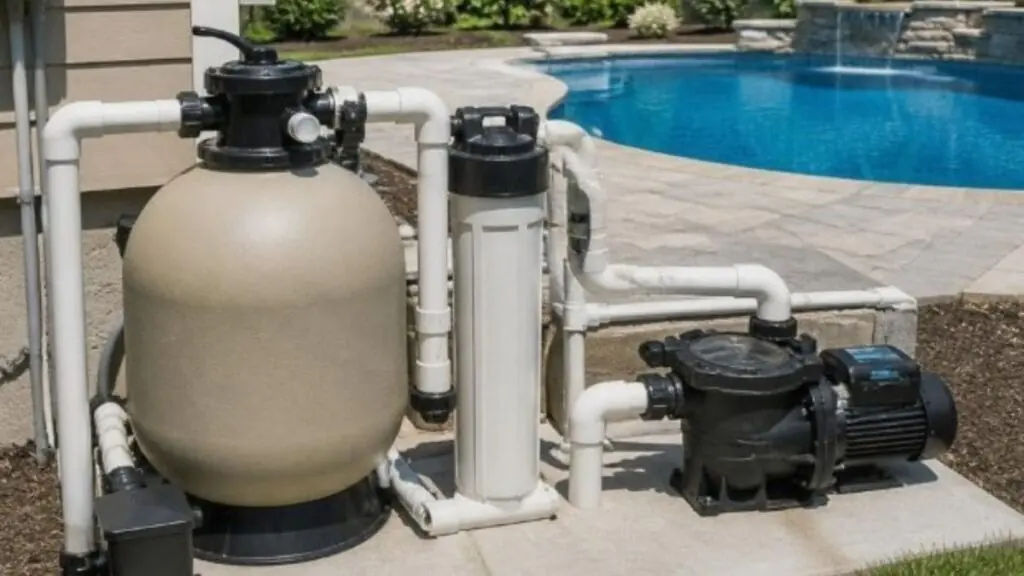
The filter tank (also called the housing or shell) is the outer body. Inside it are the parts that do the actual filtering:
- Cartridge elements
- Sand or glass media
- DE powder and grids
The tank can stay in good shape for a decade or more while the internal parts wear out much sooner. For example, a cartridge may be damaged after a few years, even though the housing is fine.
Pressure readings add to the confusion. Your baseline is the pressure (measured in PSI, or pounds per square inch) right after a cleaning or backwash. Pressure well above that often means the filter is dirty, but it can also stem from a partially closed valve, a clogged return line, or a faulty gauge. Low pressure and weak return flow usually indicate a restriction upstream of the pump, such as a full skimmer or pump baskets.
Before replacing the whole filter, identify which part is actually causing the problem.
How Long Does a Sand Inground Pool Filter Last?
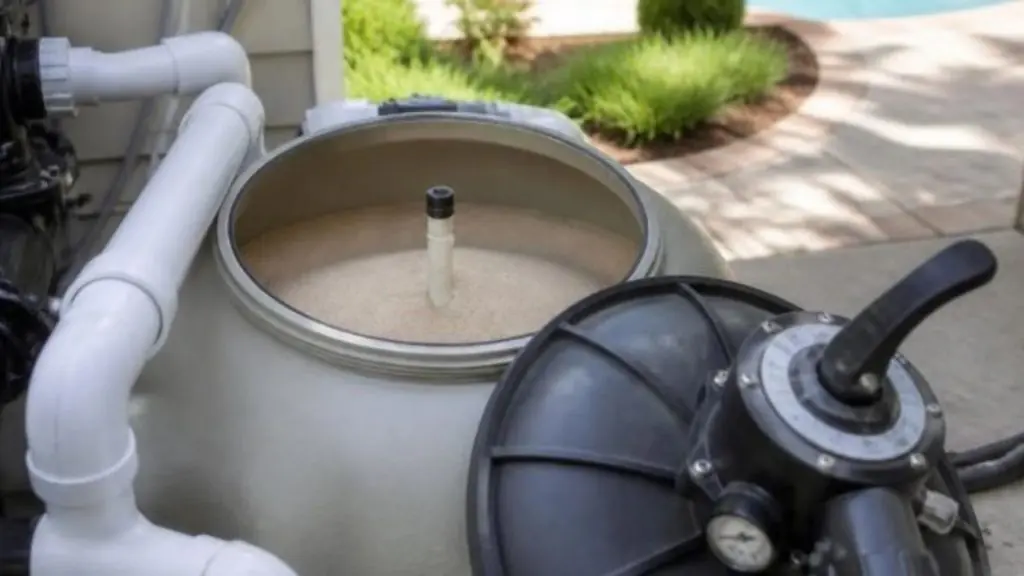
Sand filter media usually lasts 3 to 7 years, or up to 10 with light use. The tank can last 10 to 20 years with proper maintenance.
Over time, sand grains round off, clump from hard water and oils, or let water channel through the bed. Backwashing can’t fix that. Backwash when pressure rises 8 to 10 PSI above your clean baseline, or as your manufacturer recommends.
Replace the sand if the water stays cloudy after backwashing, the pressure climbs back up quickly, or you need to backwash every few days. Use pool-grade #20 silica sand in the amount listed on the tank label. If sand is returning to the pool, check the laterals first, since a cracked lateral is the usual cause.
Replace the whole filter only if the tank is cracked, bulging, or leaking. A leaking valve or clamp can usually be fixed on its own.
How Long Does a Cartridge Inground Pool Filter Last?
A cartridge element usually lasts 1 to 3 years, or up to 5 with light use and careful cleaning. Heavy swimmer loads, sunscreen, body oils, algae, pollen, and debris wear it out faster.
Replace the cartridge if you see torn fabric, flattened pleats, loose bands, or cracked end caps. If pressure stays high after a proper cleaning, check the valves, return lines, and gauge first. If water stays cloudy, check your water chemistry. If those are fine, the cartridge has likely worn out.
Many owners replace based on performance, not age. If cleaning no longer restores flow or clarity, the cartridge has reached the end of its life.
How Long Does a DE Pool Filter Last?
A DE filter has two parts to consider: the DE powder and the internal grids. The powder isn’t long-term media. You add fresh DE after every backwash or cleaning, following the manufacturer’s dosage.
DE grids typically last 5 to 10 years with proper care, though aggressive cleaning or hard water can shorten that lifespan to 3 to 5 years. Replace torn or damaged grids. If DE is returning to the pool, inspect the grids and manifold for tears or cracks. Cloudy water or high pressure that persists after cleaning can also indicate worn grids, but check water chemistry, valves, and the gauge first.
DE provides very clear water but requires more maintenance than sand or cartridge filters. Handle the powder carefully, as the dust poses an inhalation hazard, and check local rules before discharging the backwash water.
Clean, Replace the Media, or Replace the Whole Filter?
Not every filter problem means you need a new system. Match your symptom below and replace only the part that has worn out.
| Problem | What To Do |
|---|---|
| Pressure is 8 to 10 PSI above your clean baseline (or the manufacturer’s limit) | Backwash (sand, DE) or clean (cartridge) first |
| Pressure stays high after cleaning | Check the valves, return lines, and gauge, then replace the cartridge or media if they’re fine |
| Cartridge pleats are torn or crushed | Replace the cartridge |
| Sand is old and water stays cloudy after backwashing | Replace the sand |
| DE powder returns to the pool | Inspect the grids and manifold, and replace any that are torn or cracked |
| The tank is cracked or bulging | Replace the filter tank |
| Leak at the valve or clamp | Repair or replace that part first |
| The filter is too small for the pool, spa, or water features | Upgrade the filter system |
Not Sure What Your Filter Needs?
We’ll diagnose the exact issue and tell you what to clean or replace.
Signs Your Inground Pool Filter Is Not Working Right
A failing filter usually shows warning signs before it stops working. Some of these signs point to a dirty filter, and some point to a worn part, so check the simple fixes first.
Cloudy Water That Comes Back After Cleaning
If water clears briefly and then clouds up again, the media may be worn out. Check your water chemistry first, since unbalanced water can cause cloudiness even with a healthy filter.
Pressure Stays High or Climbs Back Quickly
A clean filter should bring pressure back near your baseline. If the gauge stays high, check for a partly closed valve, a clogged return line, or a faulty gauge. If you need to clean or backwash every few days, the media or internal parts are likely worn.
Weak Return Flow
Weak flow with low pressure usually indicates a blockage upstream of the pump, such as a full skimmer or pump baskets. Weak flow with high pressure points to a dirty filter or a restriction after it.
Sand, DE, or Debris Coming Back Into the Pool
Sand in the pool usually means a cracked lateral or standpipe. DE usually means a torn grid or cracked manifold. Debris can mean a torn cartridge. Each one needs an internal inspection.
Visible Damage to Cartridges or Internal Parts
Torn pleats, broken bands, cracked end caps, or damaged grids mean the part can no longer filter properly and should be replaced.
Leaks Around the Tank, Clamp, or Valve
Leaks often come from worn O-rings, a loose clamp, or a failing valve, and these are usually cheaper to fix than the tank. A cracked or bulging tank is a different matter and needs replacement.
Seeing These Warning Signs?
Get a professional inspection before it turns into a bigger repair.
What Shortens a Pool Filter’s Life?
A pool filter wears out faster when it handles extra debris, gets poor maintenance, or has to work harder than it was built to.
- Heavy swimmer load: More swimmers mean more dirt, sunscreen, and body oils that clog the media faster.
- Sunscreen and body oils: Oils coat cartridge fabric and sand grains, so cleaning and backwashing stop working as well.
- Trees, pollen, and landscaping debris: More debris means more frequent cleaning.
- Algae blooms: Algae can clog media within days, often requiring a deep clean or early replacement.
- Poor water chemistry: Low pH and high sanitizer levels can corrode metal parts and degrade seals, while high pH and alkalinity promote scale.
- Hard water and scale: Calcium deposits clump sand, coat cartridge pleats, and restrict flow.
- Storm debris: Leaves and dirt can overload the filter in a single day.
- Undersized equipment: A filter too small for the pool, spa, or water features operates at higher pressure and requires more frequent cleaning.
- Uncleaned baskets and skimmers: Debris that gets past them ends up in the filter. Full baskets also strain the pump, which affects flow.
- Over-aggressive cartridge cleaning: High-pressure spraying can tear fabric and flatten pleats.
How to Make an Inground Pool Filter Last Longer
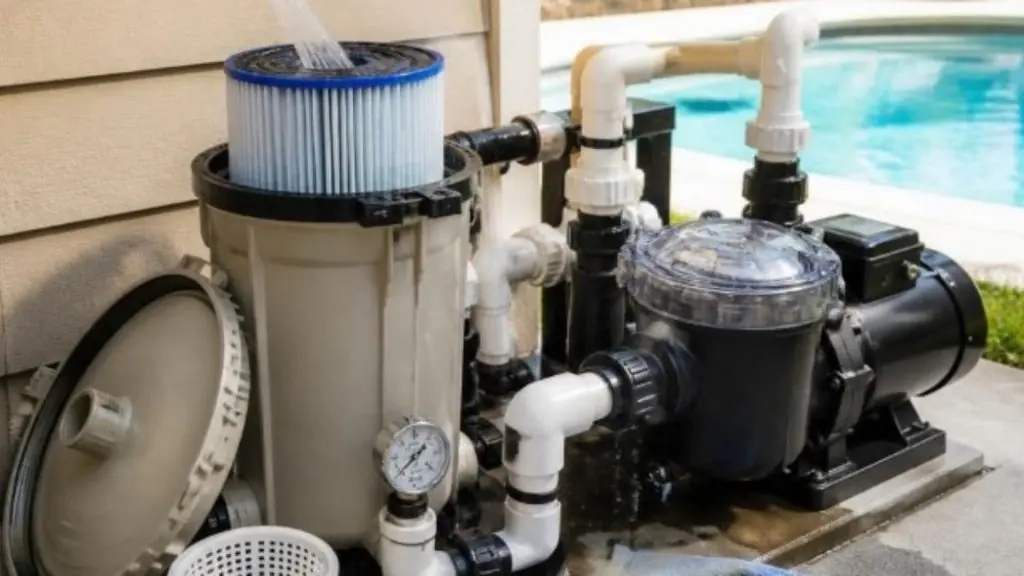
Regular maintenance can add years to your filter and help you avoid unnecessary replacements. Most of the work below already sits inside routine pool maintenance.
- Track your clean PSI reading: Note the pressure right after a cleaning or backwash. This is your baseline.
- Clean at 8 to 10 PSI above baseline: Or follow your manufacturer’s limit. Pentair uses the same 8 to 10 PSI trigger in its own homeowner guidance for Clean & Clear filters. Waiting longer strains the pump and the media.
- Keep skimmer and pump baskets clear: This protects the filter from debris and maintains steady flow.
- Balance water weekly: Stable pH, alkalinity, and calcium hardness prevent scale and corrosion.
- Rinse cartridges gently: Use a garden hose with moderate pressure, not a pressure washer.
- Deep-clean cartridges when oils or minerals build up: Use a cartridge cleaner soak rather than more spraying.
- Backwash sand and DE filters correctly: Run the backwash until the sight glass clears (if your filter has one), then rinse. Recharge DE afterward.
- Inspect O-rings, gauges, valves, grids, and laterals: Lubricate O-rings with pool-safe lubricant when you open the filter.
- Schedule an equipment-pad inspection: A yearly check by a pool pro can catch small problems early.
When an Upgrade Makes More Sense Than Another Repair
If repairs keep piling up, a new filter may cost less over time than patching an old one.
Consider an upgrade if:
- The pool has a spa, heater, water features, or automation: Added features raise flow demands and may need a larger filter.
- The filter is undersized: Check the tank label for the maximum flow rate (GPM) and compare it to your pump’s flow rate. A filter that runs above its rating will clog fast and filter poorly.
- Maintenance feels constant: If you’re cleaning or backwashing every few days, the filter may be too small or the wrong type for your pool.
- Water clarity never stays consistent: If cloudiness returns after you’ve checked chemistry, baskets, and media, the filter may not keep up.
- The tank is cracked, bulging, leaking, or near the end of its lifespan: A damaged or badly worn tank can fail under pressure, so replace it rather than repair it.
- You want lower maintenance or better efficiency: A larger filter, or a switch from sand to cartridge or glass media, can mean less frequent cleaning and lower pump pressure. Ask a pool pro to size it to your pump and plumbing.
- A renovation is already planned: Replacing the filter during a remodel saves a second round of equipment-pad labor and keeps the equipment inside your overall pool budget.
Considering a Filter Upgrade?
We’ll help you size the right system for your pool and equipment.
FAQs
How often should an inground pool filter be replaced?
Replace the media on its own schedule and the tank only when it fails. Budget for media changes inside your yearly upkeep, which runs about $1,500 to $6,000 for most pools, so a new cartridge or sand change isn’t a surprise. See our pool maintenance cost guide.
Can a pool filter last 20 years?
Yes, the tank can, with balanced water and regular inspections. The media and internal parts won’t. Cartridges, sand, glass media, and DE grids all need replacing at least once over that span, and old O-rings and valves may too.
Is it safe to open a pool filter?
Yes, if you release the pressure first. Pentair says to shut off the pump, open the air relief valve, and wait until the gauge reads zero before servicing. Trapped air can build pressure that pushes the lid off the tank.
Where can backwash water go?
It depends on your city. In Phoenix, discharging dirty backwash water and saltwater pool water to the right-of-way is prohibited, and draining to an alley isn’t allowed either. The city prefers pool water drained through your home’s sewer cleanout. Check your own city before you backwash.
Should I check the filter after a storm?
Yes. Empty the skimmer and pump baskets first, then compare the gauge to your baseline, since storm debris can push pressure past the cleaning point in a day. Along the Atlantic coast, hurricane season runs June through November, so plan on more checks then.
Should I clean or replace my pool filter cartridge?
Clean it first, and replace it once cleaning no longer brings pressure back near your baseline. A practical habit: keep a spare cartridge, so you can swap it in while the dirty one soaks overnight in cartridge cleaner and the pool never runs unfiltered.
Why is my pool still cloudy after cleaning the filter?
The filter may not be the cause. Check water chemistry first, then baskets, pump operation, and circulation. If those are fine, worn media, channeling sand, damaged grids, or an undersized filter could be the problem.
Plan the Right Equipment From the Start
A filter sized for your pool, spa, and water features lasts longer and needs less attention. Our builders complete more than 1,100 luxury pools a year across 11 markets in 7 states. Find the builder in your market to plan an equipment pad that fits your pool.
Get Your Pool Filter Serviced Right
From cleaning to replacement, we’ll keep your water clear and your system running.