Choosing the right inground pool cover starts with knowing what you want it to do. Some covers help retain heat and reduce evaporation, while others focus on safety, seasonal protection, or everyday convenience.
Below, we compare seven cover types on cost, safety, and daily use, then match them to common situations.
Quick Comparison of Inground Pool Cover Options
Each pool cover solves a different problem, from keeping water warm to improving safety and reducing pool maintenance.
| Cover type | Best for | Safety value | Heat/water savings | Ease of use | Cost level |
|---|---|---|---|---|---|
| Solar cover | Keeping water warm and reducing evaporation | Low, not designed for safety | Excellent | Easy with a reel | Low |
| Winter cover | Protecting closed pools from debris | Low, not designed for safety | Moderate | Seasonal setup | Low to moderate |
| Mesh safety cover | Off-season protection and pool safety | High when properly installed | Low | Moderate setup | Moderate |
| Solid safety cover | Safety and cleaner pool openings | High when properly installed | Good | Moderate setup | Moderate to high |
| Automatic cover | Daily convenience, safety, and cleaner water | High for ASTM-rated safety models; convenience-only automatic covers are not rated for safety | Excellent | Very easy | High |
| Leaf net | Catching leaves before they enter the pool | None | Minimal | Easy | Low |
| Custom cover | Pools with unique shapes or special features | Depends on design | Depends on the material | Moderate | Varies |
Start With the Problem You Want the Cover to Solve
Before choosing a pool cover, start with what you want it to do. The best cover is not always the most expensive option. It is the one that solves your biggest pool problem.
- “I want less cleaning.” Choose a cover that blocks leaves, dirt, and debris from entering the pool. Solid safety covers and automatic covers are good options because they help keep the water cleaner between uses.
- “I want the pool safer.” Look for a safety-rated cover designed to support weight when properly installed. Mesh safety covers, solid safety covers, and some automatic covers serve this purpose.
- “I want to keep heat in.” A solar cover or automatic cover can help reduce heat loss by limiting evaporation. This is especially useful for heated pools or homeowners who want a longer swimming season.
- “I need winter protection.” A winter cover or safety cover helps protect the pool during the off-season by keeping out debris and reducing maintenance while the pool sits unused.
- “I want to reduce evaporation.” Solar covers and automatic covers are the best choices for slowing water loss. They also help reduce the need for frequent refilling and chemical adjustments.
- “I want the easiest option.” Automatic covers are the most convenient because they open and close with minimal effort. They are a good fit for homeowners who cover their pool every day.
- “I have a freeform or luxury pool.” Custom covers may be the better choice for pools with unusual shapes, raised spas, waterfalls, tanning ledges, or other design features. A standard cover may not fit these layouts properly.
Solar Pool Covers
Solar pool covers are a budget-friendly option for homeowners seeking better heat retention and reduced water loss. They float on the pool surface to help trap warmth and reduce evaporation, which the U.S. Department of Energy says can cut the make-up water a pool needs by 30% to 50%.
They are not designed for safety and cannot support the weight of a person. Larger pools are easier to manage with a reel, and solar covers generally need replacement more often than stronger safety covers.
Winter Pool Covers
Winter pool covers handle seasonal pool closing, helping to keep leaves, debris, and sunlight out when the pool is not in use. They are especially common in colder climates where homeowners shut their pools down for several months.
These covers are not ideal for daily use and can be less convenient to remove and reinstall frequently. Basic tarp-style winter covers also do not provide the same protection as a safety cover, so homeowners should not use them as a substitute when pool safety is the main concern.
Mesh Safety Covers
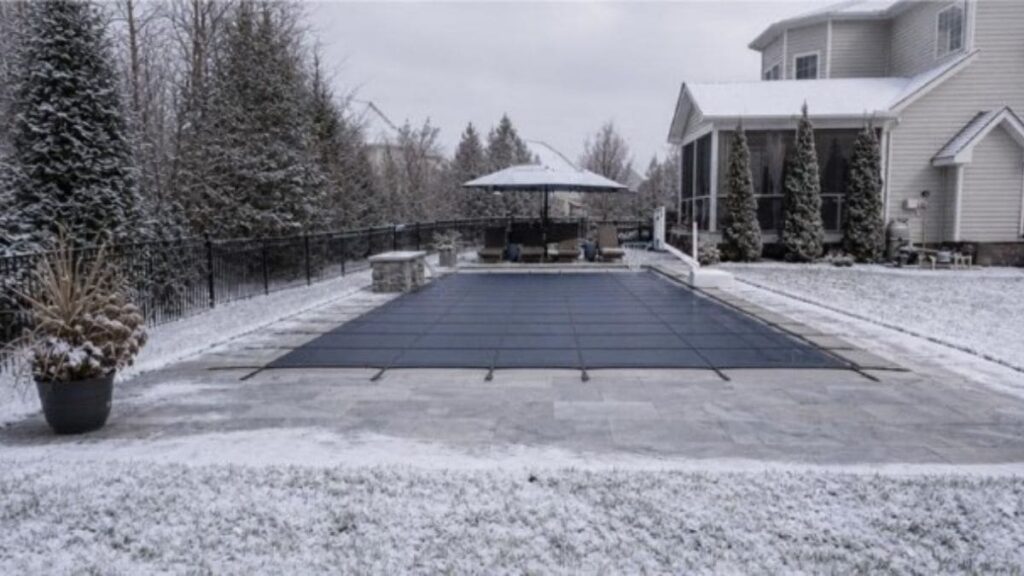
Mesh safety covers anchor to the pool deck and protect the pool during the off-season. They allow rainwater and melted snow to drain through the material, which helps prevent standing water from collecting on the surface.
They are lighter and easier to handle than solid safety covers, making them a popular choice for winter protection. However, mesh covers can allow some fine dirt and sunlight through, which may require extra cleanup when opening the pool.
Solid Safety Covers
Solid safety covers provide strong protection while also blocking sunlight, leaves, and debris from entering the pool. By keeping sunlight out during the off-season, they help reduce algae growth and make spring pool opening easier.
Because they are heavier than mesh covers and don’t allow water to drain through, solid safety covers typically require a cover pump to remove standing water and prevent excess weight on the cover.
Homeowners must anchor and maintain them properly to get reliable safety and long-term performance.
Automatic Pool Covers
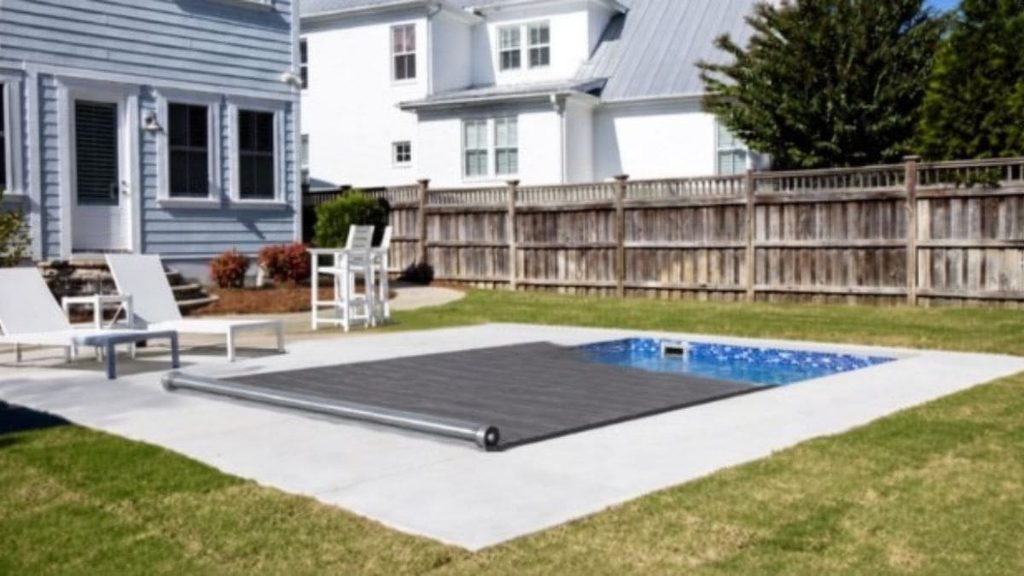
Automatic pool covers are the premium option for homeowners who want the easiest daily use, heat retention, and reduced evaporation, with some models also offering safety-rated protection.
With push-button operation, covering the pool takes seconds, making it much more realistic to use the cover every day.
The higher upfront cost makes them a bigger investment, but they can provide long-term convenience and savings. Homeowners who want safety coverage should confirm the cover meets ASTM F1346 standards, since not all automatic covers carry a safety rating.
They work best when planned during new pool construction, as track placement affects both performance and the appearance of luxury pool designs. Not every pool shape is an easy fit, especially pools with complex curves or special features.
Not Sure Which Cover Fits Your Pool?
We’ll help you compare options based on your goals and budget.
Leaf Nets and Add-On Covers
Leaf nets make fall cleanup easier by catching leaves and large debris before they reach the pool. They are especially useful for homes with many trees or for properties that experience heavy leaf buildup during certain seasons.
Homeowners often place these nets over winter or safety covers to reduce cleaning work, but the nets are not a standalone safety solution. They are a simple add-on that helps protect the main pool cover and makes seasonal maintenance easier.
Custom Covers for Luxury or Freeform Pools
Custom covers fit pools that do not have a simple rectangular design. Freeform pools, spas, tanning ledges, raised walls, water features, and vanishing edges require accurate measurements and careful planning to ensure the cover fits properly.
For luxury pools, the cover design is part of the overall backyard appearance. You may need to plan automatic covers early during construction, while installers can build custom safety covers to match unusual shapes.
Details like cover color, track placement, and anchor locations can affect how the pool deck looks once the cover is in place.
How Much Do Inground Pool Covers Cost?
Safety covers run about $1,500 to $5,000, automatic systems about $15,000 to $25,000, and solar and winter covers cost less than either. It sits on top of your inground pool cost, not inside it.
A basic solar or winter cover focuses on protection and maintenance, while safety and automatic covers require stronger materials, hardware, and installation.
| Cover type | Typical cost range |
|---|---|
| Solar covers | Lowest-cost option |
| Winter covers | Less than a safety cover |
| Mesh safety covers | $1,500 to $3,000 |
| Solid safety covers | $3,000 to $5,000 |
| Automatic covers | $15,000 to $25,000 |
These are general price ranges for residential inground pools. The final cost can change based on your pool design, materials, installation needs, and whether you are adding the cover to an existing pool or planning it during new construction.
Main factors that affect pool cover cost:
- Pool size: Larger pools require more cover material and stronger support systems, increasing both material and installation costs.
- Pool shape: Simple rectangular pools are easier and less expensive to cover. Freeform pools with curves, spas, tanning ledges, or water features often require custom solutions.
- Cover type: Solar and winter covers are more affordable because they use simpler materials. Safety and automatic covers cost more because they require stronger fabrics, anchors, tracks, or operating systems.
- Manual vs automatic: Automatic covers have a higher upfront cost because they include motors, tracks, and control systems that allow push-button operation.
- Deck anchors: Safety covers require properly placed anchors around the pool edge. The number and type of anchors can affect installation costs.
- Track system: Automatic covers need tracks to guide the cover across the pool. Track placement and design can affect both the price and the appearance of the pool deck.
- Custom measurement: Pools with unusual layouts need detailed measurements and custom fabrication to ensure the cover fits correctly.
- Installation labor: Professional installation adds to the cost but helps ensure the cover works properly and delivers the protection it promises.
- Existing pool vs new build: Installing a cover during new pool construction is often easier because the design can include tracks, anchors, and storage areas from the beginning. Retrofitting an existing pool may require additional modifications.
Get an Accurate Cover Quote for Your Pool
Pricing based on your pool’s size, shape, and the cover type you need.
Which Pool Cover Is Best for Your Situation?
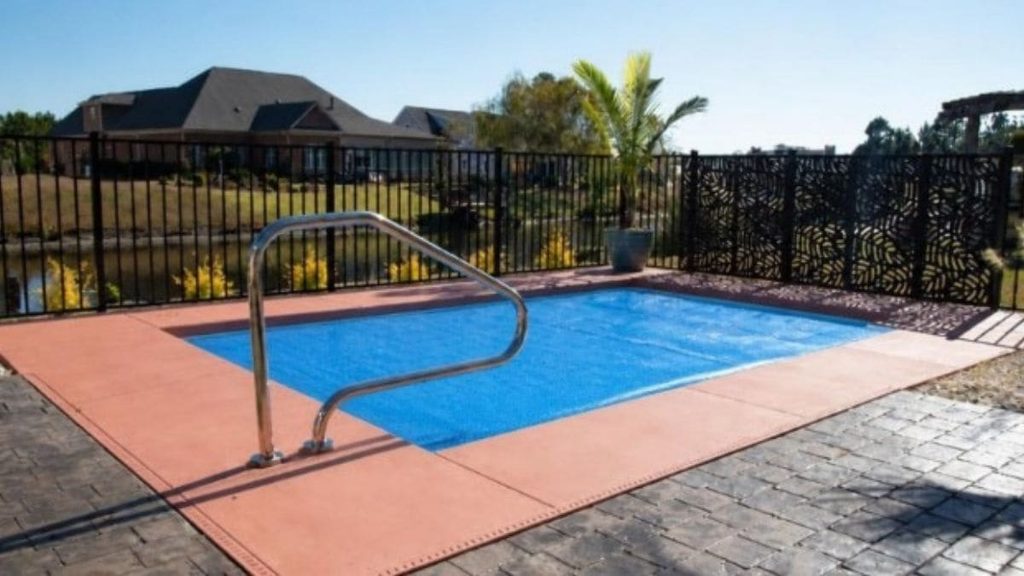
The best pool cover depends on what you want to improve. Some covers prioritize safety, while others focus on heat retention, easier maintenance, or lower cost.
- Best for families with young children: Choose an ASTM F1346 safety cover or an automatic safety cover. These options provide a stronger barrier when you install and maintain them properly.
- Best for heating: Choose a solar cover or an automatic cover. Both help reduce heat loss by limiting evaporation and keeping warmer water in the pool.
- Best for evaporation: Choose a solid cover or an automatic cover. These options create a stronger barrier between the water and outside air, helping reduce water loss.
- Best for winter: Choose either a mesh or a solid safety cover. They protect the pool during the off-season while helping keep debris out.
- Best for leaves: Choose a safety cover with a leaf net. The leaf net catches heavy debris first, making seasonal cleanup easier.
- Best for luxury pools: Choose a custom safety cover or automatic cover. Installers can design these around unique features like freeform shapes, spas, tanning ledges, and water features.
- Best for convenience: Choose an automatic cover. With push-button operation, covering the pool becomes a realistic daily habit.
- Best for budget: Choose a solar cover or basic winter cover. These provide affordable protection and maintenance benefits without the higher cost of safety or automatic systems.
Safety: Not Every Pool Cover Is a Safety Cover
One of the biggest mistakes homeowners make is assuming every pool cover provides the same level of protection. In reality, only covers that meet safety cover design and installation requirements help prevent accidental access.
- Solar covers are not safety covers. They float on the water to reduce heat loss and evaporation, but they cannot support the weight of a person.
- Basic winter covers are not automatically safety covers. Tarp-style winter covers help keep debris out during the off-season, but they do not provide fall protection.
- Safety covers should meet ASTM F1346. This standard sets performance requirements for safety covers, so look for products that manufacturers test to this specification.
- Local codes may still require fencing, alarms, or other barriers. A safety cover does not automatically replace the pool safety requirements in your area, so check your local building and safety regulations. Many cities base their barrier rules on the ICC’s International Swimming Pool and Spa Code and then amend it, as Phoenix does, so the same cover can count in one place and not another.
- No pool cover replaces adult supervision. Even with a properly installed safety cover, adults should always supervise children around the pool, and multiple layers of protection are the safest approach.
Need a Cover That Actually Meets Safety Standard?
We’ll help you choose an ASTM-rated safety cover installed correctly.
Questions to Ask Before Buying an Inground Pool Cover
Before you choose a pool cover, ask these questions to make sure you’re buying the right option for your pool and your needs. Pair them with our general questions to ask a pool builder.
- What is my main goal: safety, heat retention, easier maintenance, or winter protection?
- Will the cover fit my pool’s shape and features, such as a spa, tanning ledge, or waterfall?
- Is the cover designed to meet ASTM F1346 if I need a safety cover?
- Do I want a manual cover, or is an automatic system worth the extra investment?
- Will I need a reel, cover pump, or other accessories?
- How easy is the cover to install, remove, and store?
- What maintenance does the cover require throughout the year?
- How long is the expected lifespan, and what warranty is included?
- Will the cover be custom-measured or made to fit my pool?
- Does the installation require deck anchors, tracks, or other modifications?
- If I am adding the cover to an existing pool, will any changes to the deck or coping be needed?
- Are there local building or safety requirements I should consider before buying?
FAQs
What is the best cover for an inground pool?
The one you’ll use. The Department of Energy calls covering the pool when it’s not in use the single most effective way to cut heating costs, with savings of 50% to 70% possible. If pulling a manual cover daily sounds like a chore, go automatic.
Are automatic pool covers worth it?
They’re worth it on a pool you heat and use most of the year. An automatic system runs $15,000 to $25,000, versus $1,500 to $5,000 for a manual safety cover. Because it closes at the push of a button, it gets used, and that’s where the savings come from.
Do pool covers reduce evaporation?
Yes, and they cut chemical use too. The Department of Energy says a cover can reduce a pool’s chemical consumption by 35% to 60%, on top of the water savings. That matters most in hot, dry markets like Phoenix, where July highs at Sky Harbor average about 106°F.
Can a pool cover replace a fence?
Sometimes, depending on the state. Florida accepts an approved safety cover as one of five options for a new residential pool. California requires two of seven safety features, and an ASTM F1346 cover counts as one. Horry County, SC, accepts one where the house forms part of the barrier.
Can a pool cover lower the cost of a pool heater?
In California, it can. New residential pools there need a heat pump or solar as the primary heat source, and solar systems run $5,000 to $20,000 in our Temecula market. The Department of Energy notes that using a cover can reduce the size of the solar system you need.
Do pool covers matter in warm climates where the pool stays open?
Yes, mainly for heat. Jacksonville’s January lows sit in the low to mid 40s, and the Department of Energy says heat pumps work best above about 45 to 50°F. A cover holds in the heat you’ve already paid for, so the heater runs less on cold nights.
Plan Your Cover With Your Pool
Automatic covers and custom safety covers fit best when the tracks and anchors are planned with the pool. Our builders complete more than 1,100 luxury pools a year across 11 markets in 7 states. Find the builder in your market to plan the cover alongside your design.
Get a Free Pool Cover Consultation
Solar, safety, winter, or automatic — we’ll help you find the right fit.