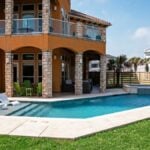
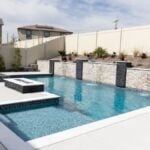
A tanning ledge is a shallow shelf built into a swimming pool where homeowners can relax in a few inches of water without entering the deeper sections. It is also called a sun shelf, Baja shelf, tanning shelf, or simply a pool ledge, but all refer to the same feature.
A tanning ledge adds a comfortable space for lounging, placing in-pool chairs, supervising young children, or cooling off on warm days. In this guide, you’ll learn how deep and large a tanning ledge should be, its pros and cons, installation options, costs, and whether it’s the right upgrade for your pool.
What Is a Tanning Ledge in a Pool?
A tanning ledge pool includes a shallow, flat platform built into the pool where you can relax while remaining partially submerged. It creates a comfortable space for lounging, cooling off, and enjoying the pool without swimming into the deeper sections.
Other Names for a Tanning Ledge
You may also hear a tanning ledge called a sun shelf, Baja shelf, tanning shelf, or sun ledge. While the names differ, they all describe the same shallow, flat area that is commonly built at the pool entry or along one side of the pool.
Pool builders may use one term more than another, but the design and purpose remain the same. When comparing pool plans or talking with a contractor, knowing these names helps you understand exactly which features are included in the design.
What Homeowners Use It For
Many homeowners use a tanning ledge to place in-pool lounge chairs, sit with their feet in the water, or relax without taking up space in the main swimming area. The shallow water keeps you cool while giving you a comfortable place to read, chat, or enjoy the sun.
A tanning ledge also works well as a supervised splash area for young children and a convenient spot for pets to cool off before entering deeper water. It can also make getting in and out of the pool feel easier by providing a wide, stable area near the entrance, so you don’t have to step directly into deeper water.
How Deep Should a Tanning Ledge Be?
The right tanning ledge depth makes a big difference in how comfortable and useful the space feels.
Best Depth for Lounge Chairs
A water depth of around 6 inches is a great choice if your main goal is relaxing on in-pool lounge chairs. It keeps your body cool without covering too much of the chair, creating the classic resort-style look many homeowners want.
A depth of around 9 inches is the most popular option because it works well with many ledge loungers while providing enough water to cool your legs and lower body. Before buying furniture, check the manufacturer’s recommended water depth so the chairs sit level and stay stable on the ledge.
Best Depth for Kids and Pets
A tanning ledge with around 12 inches of water gives children more room to splash, sit, and play under adult supervision. It also creates a comfortable place for pets to cool off before moving into deeper water or climbing back out of the pool.
Keep in mind that 12 inches can be too deep for some chaise-style in-pool loungers, which are designed for shallower water. Whatever depth you choose, keep in mind that water levels shift with evaporation and seasonal changes, so a ledge built at 9 inches can run shallower for weeks at a time.
Ask your builder how that affects furniture fit before finalizing the depth. If your family plans to use both loungers and the ledge as a play area, consider which activity matters most before choosing the final depth.
Best Depth for a Luxury Look
Many high-end residential pools use a tanning ledge with around 6 to 9 inches of water because it creates the clean, mirror-like appearance seen in luxury resorts. This depth lets the water gently cover the surface while keeping lounge chairs partially exposed for a polished, upscale finish.
A ledge that is too deep can hide more of the furniture, reducing the visual effect that makes this feature stand out. If you’re building a pool with appearance in mind, pairing a 6- to 9-inch tanning ledge with matching in-pool furniture creates a balanced design that looks just as good as it functions.
Design the Perfect Tanning Ledge
Get expert recommendations for the right size, depth, and layout for your pool.
How Big Should a Pool Tanning Ledge Be?

The best tanning ledge size is the one that fits how you’ll actually use your pool, not just what looks good in a design photo. Before settling on the dimensions, picture where people will lounge, where kids will play, and how much open water you want for swimming.
A tanning ledge becomes part of the pool’s usable space, so every extra foot of shelf space reduces the main swim area. Plan the ledge as part of the full pool layout instead of treating it as an add-on, especially if you’re working with a limited backyard.
Here is a simple guide to help you choose the right size:
- Small ledge (roughly 6′ x 6′): Best for a single in-pool lounge chair or a simple seating area. This works well for compact pools where preserving swim space is the top priority.
- Medium ledge (roughly 8′ x 8′ to 10′ x 8′): Designed for two lounge chairs with enough room to relax comfortably. This is a popular choice for families who want a functional sun shelf without making the pool feel crowded.
- Large ledge (roughly 14′ x 8′ to 16′ x 8′): Fits two lounge chairs plus an umbrella sleeve or a small side table. It creates a more social space where people can relax together while staying close to the water.
- Extended ledge (18’+ wide): Provides room for multiple chairs, a kids’ splash area, and a strong visual feature that gives the pool a resort-style appearance. This option works best on larger pools where the remaining swim area still feels open and comfortable.
Tanning Ledge Pool Pros and Cons
A tanning ledge can make your pool more comfortable and visually appealing, but it is not the right choice for every backyard. Considering both the advantages and trade-offs before construction will help you decide whether the extra space is worth the investment.
Pros of a Tanning Ledge
Beyond everyday use, a tanning ledge adds real value to how the pool looks and functions as a whole. It gives the pool a resort-style focal point that’s hard to replicate with a standard rectangular design, and it’s one of the features buyers notice and remember if you ever sell the home.
A well-placed ledge can also make a pool feel larger than it is, since the shallow, reflective water reads as open space even when it’s technically part of the pool’s footprint. And because it is a flat, stable surface, it doubles as extra entertainment space during parties without anyone actually having to get in the water.
Cons of a Tanning Ledge
A tanning ledge occupies part of the pool, leaving less room for swimming, games, or lap swimming. In smaller pools, this trade-off can make the swimming area feel noticeably tighter.
The shallow shelf can collect leaves and debris if water circulation is not properly planned, so proper return-jet placement is important during construction. You’ll also pay more for the added materials, labor, and optional features such as bubblers, umbrella sleeves, or in-pool furniture.
Can You Add a Tanning Ledge to an Existing Pool?
Yes, you can add a tanning ledge to an existing pool in many cases, but the project starts with evaluating the pool’s structure and construction. The pool type, surface, plumbing, and overall remodel scope determine how practical the upgrade will be and how much work is involved.
Adding a Tanning Ledge to a Gunite or Concrete Pool
Gunite and concrete pools offer the most flexibility because they can be reshaped during a remodel. A contractor can build a new tanning ledge by modifying the pool shell, extending the structure, and tying the new section into the existing finish. (See our concrete vs. gunite guide if you’re unsure what “shotcrete” means here.)
Many homeowners combine this upgrade with resurfacing so the old and new areas match when the project is complete. See our pool resurfacing cost guide for what that typically runs. It is also a good time to add features such as bubblers, umbrella sleeves, or new return jets that improve both comfort and water circulation.
Adding a Tanning Ledge to a Fiberglass Pool
Adding a tanning ledge to a fiberglass pool is possible, but the options are more limited because the shell is manufactured as a single piece. Major structural changes can affect the shell’s strength, so many remodels focus on manufacturer-approved options or compatible add-on systems. See our fiberglass pool cost guide if you’re still deciding between pool types.
Before moving forward, have the pool inspected to confirm the shell can support the planned modification. If a built-in ledge is impractical, other shallow lounging features may offer a better long-term solution.
Adding a Tanning Ledge to a Vinyl Liner Pool
A tanning ledge can also be added to some vinyl liner pools, but the work is more involved than it is with concrete pools. The new ledge must fit the pool structure, and the liner often needs to be replaced or custom-made to match the new shape.
Many homeowners schedule this project when the existing liner is already due for replacement, which happens every 7 to 10 years. See our vinyl liner pool cost guide for current replacement pricing.
Combining both jobs reduces duplicate labor and gives the finished pool a cleaner, more seamless appearance.
When It Is Not Worth Adding One
Adding a tanning ledge may not be the best investment if your pool is already small, and losing swim space will affect how you use it. In those cases, keeping the open swimming area often provides more value than adding another feature.
It may also be hard to justify the remodel if it requires major structural work, extensive plumbing changes, or a full pool reconstruction. Ask your contractor to compare the remodeling cost with the price of other upgrades so you can choose the option that delivers the greatest benefit for your budget.
A tanning ledge remodel can also trigger permit or HOA review depending on the scope of work. See our pool permit guide and HOA pool approval guide if your project involves structural changes.
Thinking About Adding a Tenning Ledge?
We’ll inspect your pool and explain the best remodeling options for your space.
How Much Does a Tanning Ledge Pool Cost?
The cost of a tanning ledge is easier to manage when it is included in the original pool design rather than added later, where it becomes part of your overall inground pool cost. For an existing pool, the price can increase because the work often involves demolition, structural changes, resurfacing, tile work, and plumbing adjustments.
In a new pool, the builder can form the tanning ledge as part of the shell during the pool installation process, reducing extra labor and improving efficiency. During a remodel, the crew may need to remove part of the existing pool before building the new ledge, which can complicate and lengthen the project.
| Project | Estimated Cost* |
|---|---|
| Basic tanning ledge in a new gunite or shotcrete pool | $3,000-$5,000 |
| Larger ledge with an umbrella sleeve | $4,500-$7,500 |
| Ledge with bubblers | $5,000-$8,500 |
| Ledge with premium tile finishes | $6,000-$10,000 |
| Existing pool remodel with ledge addition | $5,000-$15,000+ |
*These are general planning ranges. Final pricing depends on the pool design, materials, labor rates, and the amount of construction required.
These ranges apply to gunite and shotcrete pools, where the ledge is formed on site. On a fiberglass pool, the ledge is molded into the shell of models that offer one, so it’s typically already priced into the pool rather than billed as a separate add-on. If a ledge matters to you, choose a fiberglass model that already has one.
Tile is what moves a ledge up the table. See our gunite pool cost guide for full tile pricing.
Full tile runs $50 to $70 per square foot, so covering a 64-square-foot ledge adds roughly $3,200 to $4,500 on its own. Waterline tile used as an accent runs $15 to $20 per linear foot and gives you the same visual break for far less.
Luxury finishes such as premium tile, umbrella sleeves, bubblers, LED lighting, and upgraded coping will increase the overall price but also enhance the appearance and functionality of the tanning ledge. Ask your contractor for an itemized estimate so you can compare the base construction cost with optional upgrades and choose the features that fit your budget.
See our questions to ask a pool builder guide for what else to ask before signing.
Know the Real Cost Before You Build
Receive a detailed estimate with clear pricing and no unexpected costs.
Best Tanning Ledge Design Ideas for Luxury Pools
A tanning ledge becomes even more useful when you pair it with features that improve comfort and create a polished, resort-style look. The right design choices also make the space more practical for relaxing, entertaining, and enjoying the pool every day.
Tanning Ledge With In-Pool Loungers
In-pool loungers are one of the most popular additions because they turn a shallow ledge into a comfortable place to relax without leaving the water. Choose lounge chairs designed for your planned water depth so they sit securely and perform as intended.
Leave enough space between the chairs for people to walk safely across the ledge without feeling crowded. Planning the furniture layout before construction helps ensure the ledge is large enough for both comfort and movement.
Tanning Ledge With Umbrella Sleeve
An umbrella sleeve lets you add shade without placing a heavy umbrella base on the ledge. It creates a cleaner look while making the tanning ledge more comfortable during hot afternoons.
Install the sleeve during construction so it is built directly into the ledge and properly secured. Placing it where it shades the seating area helps you get the most value from the feature.
Tanning Ledge With Bubblers
Bubblers add gentle streams of water that create movement, cooling, and a relaxing sound across the tanning ledge. They also give the pool a high-end appearance that many homeowners associate with luxury resorts.
Plan the plumbing for bubblers before the pool is finished because adding them later requires more work. Many homeowners install two or more bubblers to create a balanced look across a larger ledge.
Tanning Ledge With Spa Nearby
Positioning a tanning ledge next to a spa creates a natural transition between two of the pool’s most relaxing features. The layout makes it easy for family and guests to move between the spa and the shallow ledge without crossing the entire pool.
This design also creates a strong focal point that enhances the overall backyard layout. Matching the finishes between the spa and tanning ledge gives the project a seamless, custom-built appearance.
Tanning Ledge With Dark Pool Finish
A dark pool finish can make the water on the tanning ledge appear richer and more reflective, giving the pool a dramatic, upscale look. It also creates a strong contrast with light-colored coping, furniture, and surrounding decking.
Keep in mind that darker finishes absorb more sunlight, which can make the shallow water feel warmer during the day. If you choose this design, pairing it with an umbrella sleeve or nearby shade helps keep the ledge comfortable while preserving its luxury appearance.
Is a Tanning Ledge Worth It?

A tanning ledge is worth it if you want your pool to do more than provide a place to swim. It creates a comfortable shallow-water area for lounging, family time, in-pool furniture, and a resort-style design that many homeowners enjoy every day.
It may not be the right investment if your priority is lap swimming, deep-water games, or maximizing the open swim area. Because a tanning ledge takes up part of the pool, make sure its added comfort and functionality fit the way you plan to use your backyard.
Tanning Ledge Mistakes to Avoid
A well-designed tanning ledge should enhance how your pool looks and functions, but a few planning mistakes can lead to unnecessary costs or daily frustration. Before construction begins, review these common issues with your contractor so the finished ledge fits your pool and your planned use.
- Choosing the wrong water depth: A ledge that is too shallow or too deep may not work well with your planned in-pool loungers or the activities you have in mind.
- Making the ledge too large: A larger tanning ledge reduces the available swim area, so balance its size with the rest of the pool layout.
- Skipping furniture planning: Decide on your lounge chairs, umbrella, or side table before construction so the ledge is sized correctly.
- Forgetting about water circulation: Poorly placed return jets can allow leaves and debris to collect on the shallow shelf, increasing maintenance.
- Not adding an umbrella sleeve during construction: Installing one later is more difficult and often costs more than including it in the original build.
- Ignoring slip-resistant finishes: Choose a surface that provides good traction to help reduce slips when the ledge is wet.
- No clear marker where the ledge drops to deep water: The transition from the shallow shelf to the main pool depth should be visually obvious, through a tile band, a coping change, or a color contrast. Without one, someone stepping back off the ledge can be caught off guard by how quickly the depth changes.
- Overlooking future upgrades: If you want bubblers, LED lighting, or other water features, install the necessary plumbing and electrical connections during construction rather than remodeling later.
- Focusing only on appearance: A tanning ledge should look great, but it also needs to match how you and your family will use the pool every day.
FAQs
What is the difference between a tanning ledge and a Baja shelf?
There is no functional difference between the terms, as both describe the same shallow platform within a pool. “Baja shelf” and “sun shelf” are simply regional or builder-specific names for a tanning ledge.
Can you put lounge chairs on a tanning ledge?
Yes, tanning ledges are designed to accommodate a wide range of in-pool lounge chairs. Make sure the ledge depth matches the chair manufacturer’s recommended water depth to keep the furniture stable and comfortable.
Does a tanning ledge affect resale value?
A well-built tanning ledge is one of the features buyers remember and often expect in a resort-style backyard, so it can be a positive when you sell. It rarely adds dollar-for-dollar value on its own, but it does make a pool stand out compared to a standard rectangular design.
How much does it cost to add bubblers to an existing tanning ledge?
Adding bubblers after the pool is already built typically costs more than including them during construction, since plumbing has to be run into an existing shell. On top of the base retrofit remodel cost, budget an additional $1,500 to $4,000 specifically for the bubbler plumbing and jets.
What’s the difference between a tanning ledge and a Baja step?
A Baja step is a single wide, shallow step near the pool entry, usually just one or two steps deep. A tanning ledge is a larger, flatter platform meant for lounging, not just walking through. Some builders use the terms loosely, so confirm with your contractor which one is actually in your design.
Can a tanning ledge be heated separately from the rest of the pool?
Not typically. Tanning ledges share the same water and heating system as the rest of the pool, so the water temperature will match the main pool. If you want the ledge noticeably warmer, ask your builder about a small in-ledge spa or spillover feature instead, which can run on its own heater.
Ready to Build Your Dream Pool?
Whether you’re planning a new pool or adding a tanning ledge to an existing one, our team is here to help.
Ready to Add a Tanning Ledge?
Thinking about adding a tanning ledge to your build or an existing pool? Schedule a free consultation with your local pool team to talk through depth, size, and cost for your specific backyard.