Creating a private inground pool area starts with the right design choices, from tall hedges and privacy screens to pergolas, cabanas, and layered landscaping. These features block unwanted views and make the backyard more comfortable to use.
Below are 17 ideas, how to match them to your pool style, and what to check before you build.
Start With the View You Want to Block
The best pool privacy plans start by identifying exactly what you want to hide, then choosing a solution that blocks that view without making your backyard feel closed in.
| Privacy Problem | Best Solutions | What to Avoid |
|---|---|---|
| Neighbor’s side yard | Privacy fence, evergreen hedges, decorative screens, layered shrubs | Planting a single small shrub that leaves gaps or takes years to provide coverage |
| Second-story windows | Pergola with outdoor curtains, shade sail, mature trees, tall privacy screens | Relying on a standard 6-foot fence, which won’t block elevated views |
| Street or sidewalk view | Solid fencing, hedges, tall ornamental grasses (like miscanthus), and large planters near the property line | Leaving the pool fully visible from the front or using short plants that offer little screening |
| Pool equipment visibility | Decorative privacy panels, lattice with climbing vines, evergreen shrubs, and fencing around equipment | Fully enclosing equipment and blocking airflow needed for ventilation and service access |
| Noise from nearby homes | Masonry or solid fence walls, waterfalls or fountains to mask sound, dense evergreen hedges | Expecting plants alone to significantly reduce loud neighborhood noise |
| Small backyard feels exposed | Vertical privacy screens, slim hedges, pergola curtains, tall planters that don’t take up much space | Building tall, solid walls around the entire yard can make the space feel smaller |
| Open luxury yard that still needs softness | Layered landscaping, ornamental trees, decorative screens, cabanas, mixed planting beds | Installing one long, solid fence with no variation, which can make a large yard feel flat and uninviting |
Most backyards deal with two or three of these problems at once, so layer solutions instead of picking just one.
17 Top Inground Pool Privacy Ideas That Look Intentional
A private pool doesn’t have to feel boxed in. These ideas are designed to block unwanted views while making your backyard look as if it were planned that way from the start.
1. Layer Tall Hedges Behind a Fence
A fence gives you instant privacy, while a row of tall hedges softens its appearance and adds another layer of screening. Together, they create a more natural, high-end look than a fence alone.
This approach also helps reduce the visual impact of neighboring homes and provides greenery year-round when you choose evergreen varieties.
Best for:
- Neighboring backyards
- Property lines
- Street-facing yards
- Traditional and modern homes
2. Use Slatted Privacy Screens for a Modern Look
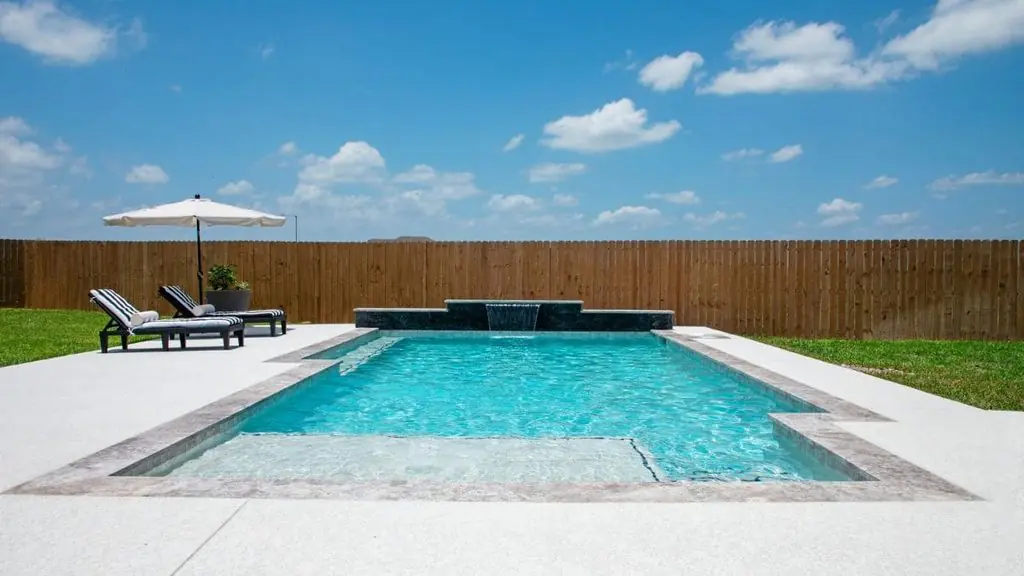
Horizontal or vertical slatted screens block direct sightlines while still allowing air and light to pass through. They are an excellent choice if you want privacy without making the yard feel closed off.
Wood, aluminum, and composite screens are available in many styles, making it easy to match your home’s exterior.
Best for:
- Modern pools
- Lounge areas
- Hiding specific views instead of enclosing the entire yard
3. Add a Stone or Stucco Privacy Wall
A masonry privacy wall creates a permanent, upscale feature that also helps reduce noise and wind. It works especially well around seating areas or outdoor kitchens.
You can soften the look by adding landscape lighting, decorative planters, or climbing plants nearby.
Best for:
- Luxury backyards
- Noise reduction
- Long-term durability
4. Build a Pergola Over the Lounge Area
A pergola creates a comfortable retreat without covering the entire pool. Add outdoor curtains, retractable shades, or climbing vines to increase privacy when needed.
It also defines the lounge space and provides welcome shade during the hottest part of the day.
Best for:
- Seating areas
- Outdoor dining
- Partial overhead privacy
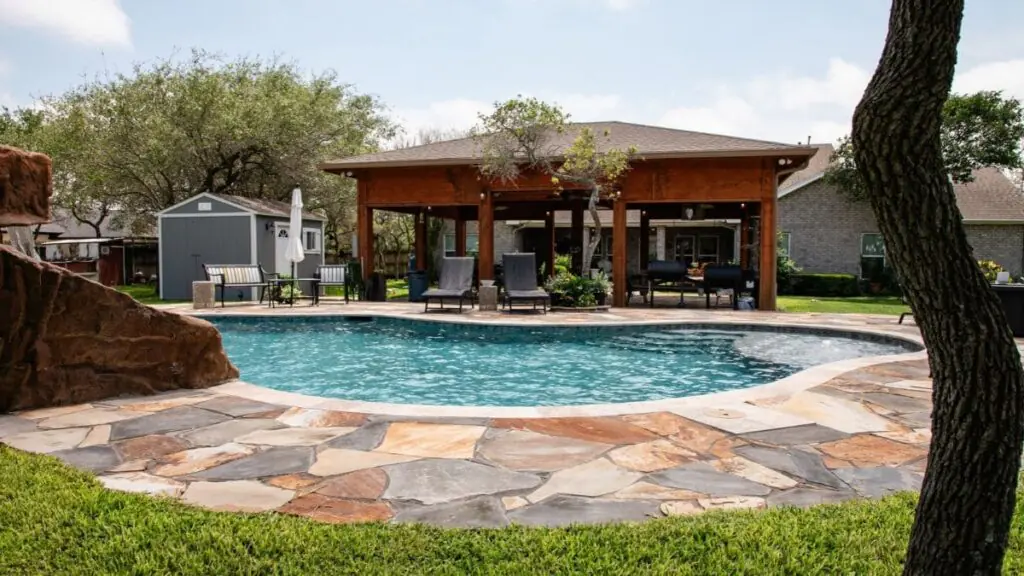
5. Use a Cabana as a Privacy Anchor
A pool cabana provides storage, shade, and a place to change, while also serving as a visual barrier between your pool and neighboring properties. Position it where it blocks the most noticeable view, such as a two-story home or nearby street.
Best for:
- Large backyards
- Resort-style designs
- Multi-purpose outdoor spaces
6. Plant Narrow Privacy Trees Along One Edge
Columnar trees like Italian cypress or similar narrow-growing evergreens provide height without taking up much yard space.
Planting them along one side of the pool creates a clean privacy screen while preserving open views elsewhere.
Best for:
- Narrow lots
- Side property lines
- Long pool layouts
7. Create a Living Wall
A living wall turns privacy into a design feature by covering a vertical surface with lush greenery. It is a permanent, built-in structure, so it works best when you know exactly where you need coverage. Besides blocking views, it adds texture and a cooling effect around the pool area.
Best for:
- Small backyards
- Contemporary landscapes
- Decorative focal points
8. Place Outdoor Curtains Around a Pavilion
Curtains make a pavilion feel like a private outdoor room. Open them when you want more airflow or close them during gatherings for added privacy.
Choose weather-resistant fabrics that withstand sun and moisture.
Best for:
- Covered patios
- Outdoor entertaining
- Flexible privacy
9. Use Raised Planters Around the Pool Deck
Raised planters add height where ground-level landscaping isn’t enough. Fill them with ornamental grasses, shrubs, or flowering plants to soften the hardscape while screening nearby views.
Unlike fixed walls or structures, planters can be rearranged or added to over time, making them a flexible, lower-commitment option.
Best for:
- Pool decks
- Small spaces
- Decorative privacy
10. Add a Water Wall or Sheer Descent Wall
A water wall adds sound privacy by masking neighborhood noise, and it becomes an attractive focal point on its own. Pair it with a taller wall, fence, or dense planting nearby if you also need to block sightlines, since most water walls are built low and aren’t tall enough for visual screening on their own.
Best for:
- Busy neighborhoods
- Modern pool designs
- Noise masking
11. Use Layered Landscaping Instead of One Tall Barrier
Instead of relying on a single fence, combine trees, shrubs, ornamental grasses, and flowering plants to create depth and privacy. Layered landscaping feels more natural and avoids the boxed-in look that tall walls can create.
Best for:
- Large yards
- Natural landscapes
- Long-term curb appeal
12. Screen the Pool Equipment Area
Pool pumps, filters, and heaters are necessary but rarely attractive. Decorative screens, lattice with climbing vines, fencing, or shrubs can hide the equipment while still allowing proper airflow for servicing.
Choose a design that matches nearby fencing or landscaping.
Best for:
- Cleaner backyard appearance
- Equipment concealment
- Improved curb appeal
13. Position Lounge Seating Where Privacy Already Exists
Sometimes the easiest solution is moving your seating area instead of building another structure.
Place lounge chairs beside existing hedges, fences, or garden beds so those features naturally provide privacy.
Best for:
- Budget-friendly upgrades
- Existing landscaped yards
- Quick improvements
14. Add Shade Sails for Overhead Privacy
Shade sails help block views from second-story windows while providing relief from direct sunlight.
They come in different shapes and colors, making them an affordable way to improve both comfort and privacy.
Best for:
- Multi-story neighborhoods
- Sun protection
- Contemporary outdoor spaces
15. Use Trellis Panels With Climbing Plants
A trellis becomes more attractive over time as vines grow across it, creating a soft, green privacy screen. It’s also one of the most budget-friendly options on this list, since the coverage gradually fills in as the plants grow. Flowering vines also add seasonal color and help break up large fence lines.
Best for:
- Garden-inspired backyards
- Decorative screening
- Smaller spaces
16. Design a Courtyard-Style Pool
A courtyard layout places the pool inside a more enclosed outdoor living space using walls, the house, or nearby structures. This naturally increases privacy while creating a secluded, resort-like atmosphere.
Best for:
- New pool designs
- Urban homes
- Luxury outdoor living
17. Pair a Fire Feature With Your Privacy Wall
A fire pit or outdoor fireplace next to a privacy wall turns a screened corner into a place people actually use. The wall handles privacy, while the fire feature gives people a reason to stay outside long after the sun goes down.
This works best as a finishing touch on an existing wall or screen rather than a standalone privacy solution.
Best for:
- Outdoor entertaining
- Luxury pool landscapes
- Creating a cozy backyard destination
Best Privacy Ideas by Pool Style
The best privacy solution should match your pool’s design so it looks like part of the original plan instead of an afterthought.
- Modern pools: Choose clean-lined features like slatted privacy screens, smooth stucco walls, linear evergreen hedges, and perforated metal panels for a variation on the slatted-screen look. These elements provide privacy while maintaining a sleek, minimalist look.
- Tropical pools: Surround the space with layered planting, palms, and a poolside cabana, adding broad-leafed tropical plants like bird-of-paradise or elephant-ear for extra texture between the layers. Bamboo-style screens can also work well when they suit your climate and local guidelines, adding a relaxed, resort-inspired feel.
- Mediterranean pools: Natural stone privacy walls, Italian cypress trees, pergolas, and climbing vines complement Mediterranean architecture. Together, they create a timeless, elegant backyard with plenty of shade and privacy.
- Small pools: Make the most of limited space with raised planters, decorative privacy screens, outdoor curtains, and compact trees or narrow shrubs. These options add screening without making the yard feel cramped.
- Luxury estate pools: Create layered privacy with courtyard-style layouts, pool houses or cabanas, mature landscaping, and water walls. Combining several features produces a private outdoor retreat that feels intentional.
Not Sure Which Privacy Features Fits Your Style?
From modern screens to Mediterranean walls, we’ll match the designs to your backyard.
What to Consider Before Adding Privacy Around an Inground Pool?
Before installing any privacy feature, check local fence and pool barrier requirements to ensure your design complies with safety rules. If you live in an HOA community, review their guidelines for approved fence heights, materials, and exterior changes. Your builder should confirm both, so add it to your questions to ask.
Measure your property lines and confirm setback requirements before building walls, screens, or planting large trees, since features placed too close to boundaries can create conflicts and affect future maintenance access. Large trees planted too close to the pool can also cause root issues, drainage problems, and extra leaf cleanup over time.
Consider how privacy structures will handle weather, daily use, and access for pool service and equipment repairs, since screens and shade sails also need proper wind support. Maintenance matters just as much: a masonry or stucco wall needs almost no upkeep once built, while hedges, vines, and living walls need regular trimming or irrigation to stay full.
Finally, think about light and air. A tall, solid wall or fully enclosed courtyard can block afternoon sun on the lounge deck or trap heat around the water, so leave gaps, use partial screening, or stagger plant heights if you want privacy without losing sunlight or airflow where you actually spend time.
Get It Right the First Time
We’ll account for setbacks, HOA rules, and maintenance before you build.
Which Pool Privacy Idea Is Right for Your Backyard?
The right privacy solution depends on what you need to block, how much space you have, and how much maintenance you want to handle.
- Need fast privacy: Choose privacy screens, outdoor curtains, or fencing. These options create an immediate barrier without waiting for plants to grow.
- Need luxury privacy: Consider a cabana, stone wall, water wall, or layered landscape design to give the pool area a resort feel without sacrificing scale.
- Need privacy from above: Use pergolas, shade sails, mature trees, or a pavilion. These solutions help block views from second-story windows and nearby elevated properties.
- Need soft privacy: Add hedges, layered planting, or trellis panels with climbing vines. These options create a natural screen while keeping the backyard open and inviting.
- Need low-maintenance privacy: Choose masonry walls, composite privacy screens, or structured evergreen planting. These options provide long-lasting coverage with less ongoing care.
- Need small-yard privacy: Use vertical screens, raised planters, or compact trees. These solutions add privacy without taking away valuable pool deck space.
FAQs
Does a privacy fence count as a pool barrier?
It can, if it meets your local barrier code. Horry County, SC, sets a 48-inch minimum, Dallas-area cities ask for 48 to 60 inches, and the City of Phoenix requires 5 feet. Gates usually need to close and latch on their own.
Do pergolas and privacy walls need a permit?
Often, yes. In the Temecula area, patio covers, retaining walls, built-in grill structures, and fire pits with gas lines all need permits. Our Temecula builders handle most of them on the pool permit, though patio covers sometimes go through a specialty contractor.
How close to the property line can I build a privacy wall?
It depends on your city’s setbacks and any utility easements. Temecula-area structures typically sit at least 5 feet from property lines, and Corpus Christi lots often carry public utility easements of 5 to 14 feet that you can’t build into.
Can I keep mature trees for privacy during pool construction?
Often, if you plan for it early. Some Dallas-Fort Worth cities require an arborist plan to protect established trees during excavation. Ask your builder to mark the root zones before the dig and keep equipment access away from them.
Do I need HOA approval for pool privacy features?
Usually. Most HOAs review fences, walls, and structures that neighbors or the street can see. Submit the privacy plan with your pool approval package so one review covers both. In Houston Northwest communities, HOA approval alone typically takes 2 to 4 weeks.
What privacy idea works best on a sloped yard?
Use the slope. A retaining wall can hold back the hillside and screen views at the same time. In Temecula, where slopes are common, basic retaining walls add about $4,000 to $15,000, and a raised sheer descent wall adds about $3,000 to $10,000.
Plan Privacy Into Your Pool Design
Privacy is easiest to get right when it’s drawn into the pool plan before the dig. Our builders complete more than 1,100 luxury pools a year across 11 markets in 7 states. Find the builder in your market to plan fences, walls, and plantings alongside your pool.
Design Your Private Backyard Retreat
Get expert help choosing and installing the right pool privacy solution.