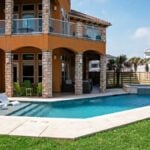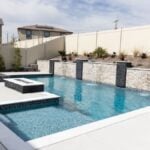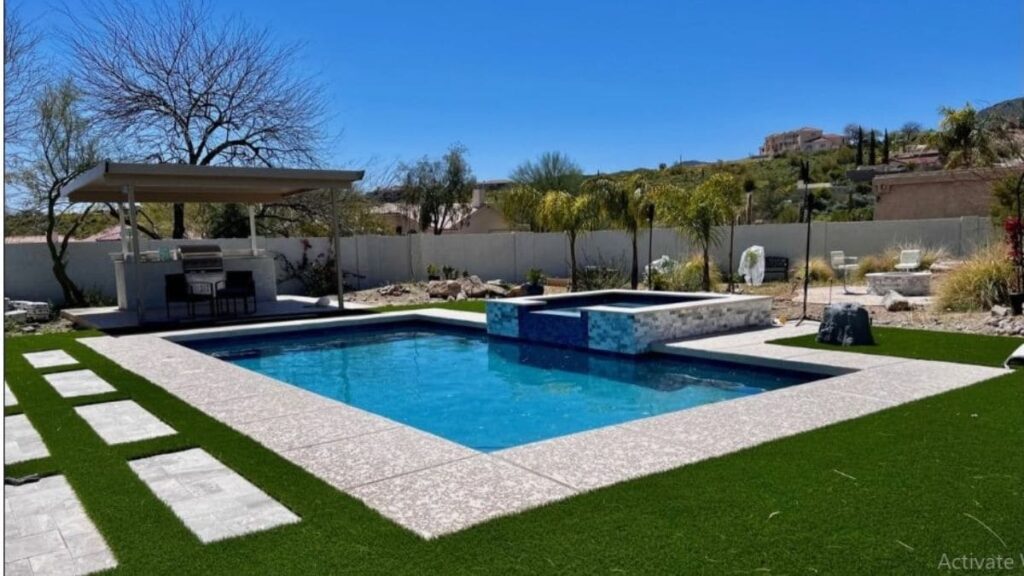
Plan your pool safety features from the very beginning, especially if you have young kids or host guests often.
Safety doesn’t have to fight with design. A sleek infinity edge and a gate alarm can share the same backyard.
Planned in from the start, most of these features are a small part of your overall inground pool cost and they cost more to add later.
The Luxury Pool Safety Rule: Build in Layers
There’s no single feature that keeps everyone safe. Not a fence. Not an alarm. Not even a lifeguard. So plan in layers. If one layer fails, the next one catches it.
Each layer does a different job.
- Keep people out when the pool is not in use. Use fences and self-latching gates.
- Make the pool easier to see and navigate. Use lighting and clear sightlines.
- Reduce slip and fall risks. Use textured decking and deck drains.
- Protect swimmers in the water. Use compliant drain covers and anti-entrapment plumbing.
- Alert adults quickly. Add water alarms and smart notifications.
- Prepare for emergencies. Teach kids to swim and train adults in CPR.
Design Safety Into Your Luxury Pool From Day One
Build a pool that combines stunning features with thoughtful safety layers for your family and guests.
Layer 1: Control Access to the Pool
This layer stops the accident before it starts.
Four-Sided Pool Fence
A four-sided fence separates the pool from the house and the yard completely. This is different from a three-sided fence that uses your house as one wall. The CDC says a four-sided isolation fence cuts a child’s drowning risk by 83% compared with three-sided fencing.
Most local codes want a fence at least 48 inches tall, with no gaps big enough for a small child to slip through. Some of our markets go higher. Our Temecula builders plan for at least 5 feet, the City of Phoenix requires 60 inches, and Dallas-Fort Worth cities range from 48 to 60 inches. Your builder should confirm the local rule early in the installation process, before the fence line gets poured.
Self-Closing, Self-Latching Gate
A gate that someone can leave open defeats the fence. Self-closing hinges and a self-latching mechanism mean the gate locks itself, even if a guest forgets. The gate also has to swing away from the pool.
Put the latch high, out of reach of small hands. Most codes want it at least 54 inches from the ground.
Lockable Pool or Spa Cover
A rigid, lockable cover works as a second barrier on top of your fence. It’s especially useful on a spa.
Look for a cover that meets ASTM F1346, the safety cover standard, not just a floating solar cover. Solar covers keep heat in. They don’t stop a fall-in.
Door and Gate Alarms
An alarm on the door that leads to the pool area gives you a warning the second someone opens it. Pair it with a gate alarm for full coverage.
Some of our markets require them. Cities in the Corpus Christi area call for door and window alarms, and Temecula requires door alarms on house-to-pool doors that can’t be disabled.
These alarms cost little and install fast.
Layer 2: Make the Water Easier to Supervise
Even behind a fence, adults need to see what’s happening in the water. This layer is about visibility, not barriers.
Clear Sightlines From the House and Patio
Walk your site plan before you finalize landscaping. Big shrubs, pergolas, or outdoor kitchens can block the view from your kitchen window or patio seating, so place them around the sightlines you need to keep open.
Talk to your builder about where the main sightlines need to stay open. This is easier to fix on paper than after the concrete is poured.
Strategic Pool Lighting
Good lighting shows the whole pool, not just the deep end. LED lights along the walls, steps, and floor give you a clear view of anyone in the water after dark.
Color-changing lights look great for parties. Just make sure you can switch to bright white for supervision when kids are swimming.
Visible Steps, Ledges, and Benches
Tanning ledges and in-pool benches are popular in luxury pools. They’re also easy to miss underwater if the lighting or tile contrast is off.
Use a lighter tile or a contrasting border on steps and ledges. It helps swimmers and supervising adults spot the edge instantly.
Layer 3: Reduce Slip and Fall Risks Around the Pool
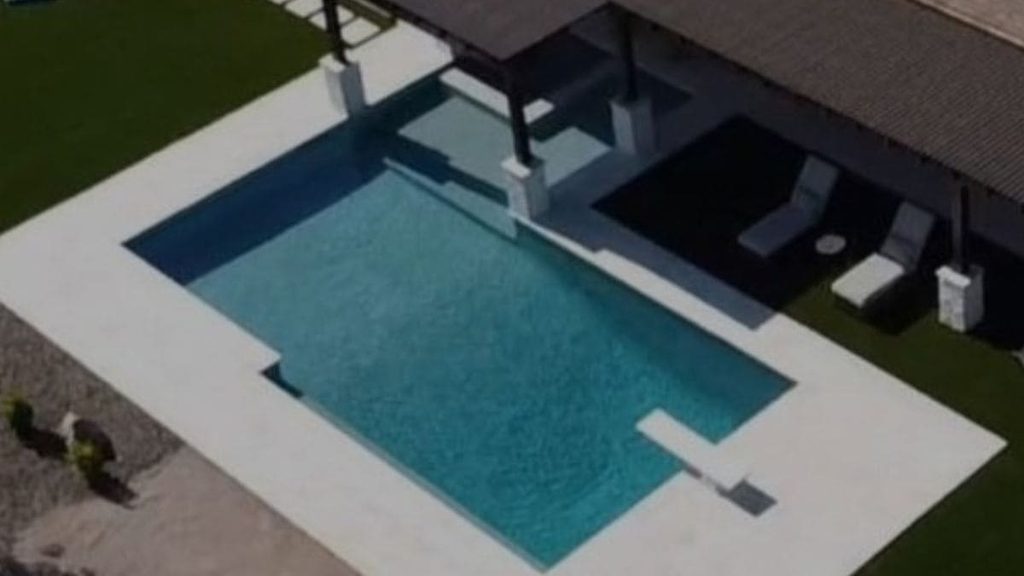
This layer is about the ground, not the water.
Slip-Resistant Pool Decking
Skip polished stone or smooth stamped concrete near the water. Choose textured concrete or pavers instead. Our guide to pool decking options compares them.
Ask your builder for the coefficient of friction (COF) rating on any decking material you’re considering. A higher COF means better grip when wet.
Safe Coping Edges
Coping is the material that caps the edge of the pool. Rounded, textured coping reduces cuts and slips compared to sharp or glossy edges.
Bullnose coping is a popular luxury choice because it’s smooth to the touch but still grips well underfoot.
Smart Drainage Around the Deck
Standing water on the deck turns a safe surface into a slip hazard fast. Deck drains and a slight slope away from the pool keep water moving instead of pooling. Runoff that drains back into the pool also carries dirt, which adds to your pool maintenance cost.
This matters even more around water features, where splash-out adds extra water to the deck all day.
Some markets build drainage into every job. In our Houston Northwest market, deck drainage lines run to the street on every project, and the owner says it’s the one rule that surprises homeowners.
Choose Pool Features That Perform Safely
Explore decking, coping, lighting, and layout options that help create a safer backyard environment.
Layer 4: Protect Swimmers Inside the Pool
This layer covers what’s happening below the surface. It’s less visible than a fence, but just as important.
Compliant Drain Covers
Every drain cover sold in the U.S. has to meet the federal anti-entrapment standard under the Virginia Graeme Baker Pool and Spa Safety Act. The Act doesn’t force homeowners to replace older covers, but CPSC staff recommend it.
If you’re resurfacing or renovating, this is a good time to swap out any drain covers that predate the 2008 standard or show cracks. See pool resurfacing cost if you are planning that work anyway.
Anti-Entrapment Design
Beyond the drain cover itself, your builder should design the plumbing with multiple drains and proper suction release systems. This spreads out suction so no single drain creates a dangerous pull.
Ask your pool builder directly how they handle anti-entrapment design. A good contractor will have a straightforward answer.
Depth Markers and No-Diving Zones
Clear depth markers help swimmers and guests judge the water before they jump in. No-diving markers in shallow zones cut the risk of diving injuries. These markers are cheap and easy to add during construction or renovation.
Layer 5: Add Smart Safety Alerts
Technology won’t replace a set of watching eyes, but it backs you up when attention slips for a second.
Pool Surface or Subsurface Alarms
Surface alarms detect ripples or waves caused by something entering the water. Subsurface alarms use sensors below the waterline for more precise detection.
Either option sends an alert to a receiver in the house, giving you a fast heads-up if someone falls in unexpectedly.
Camera-Based Pool Monitoring
Some newer systems use AI-powered cameras to watch the pool and flag signs of distress in the water. These work well as an added layer for larger pools where sightlines are tough to keep clear.
They’re not a replacement for a designated adult watching the water. Think of them as a backup set of eyes.
Smart Automation Alerts
If your pool runs on a smart automation system, you can often set alerts for gate openings or equipment issues. Some systems tie directly into your home security app.
This turns your existing pool tech into an extra safety layer without adding new hardware.
Layer 6: Prepare People, Not Just the Pool
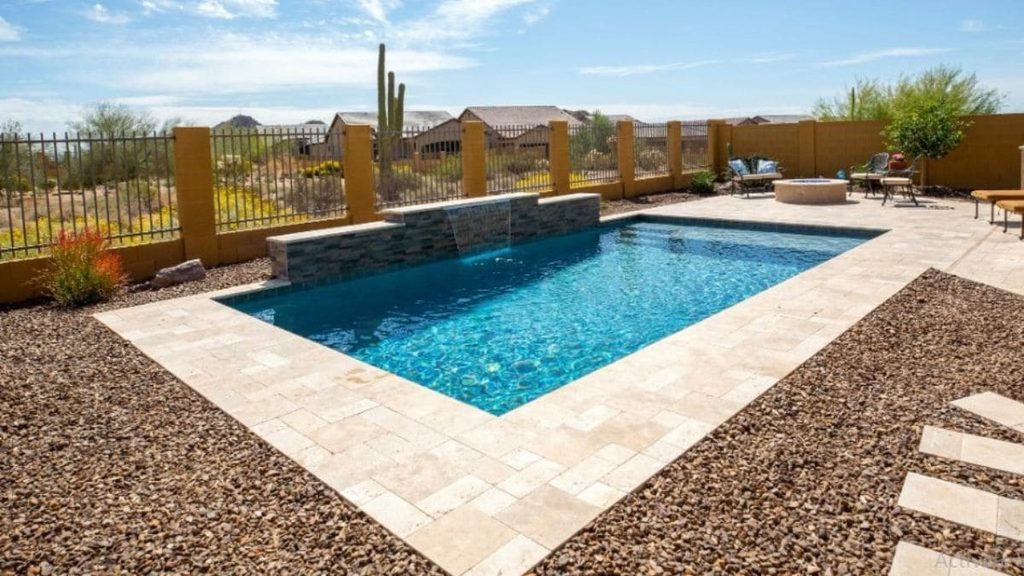
Every feature on this list supports the people around your pool. This last layer is about the people themselves.
Designated Water Watcher
At any gathering, assign one adult as the water watcher. Their only job is watching the pool,no phone and no side conversations.
Rotate the role every 15 minutes, as the CPSC’s Pool Safely campaign recommends.
Swim Lessons and Water Safety Skills
Swim lessons are one of the most effective safety investments you can make for kids in the house. The CDC says formal swimming lessons can reduce the risk of drowning among children and young adults.
If you’re hosting kids often, it’s worth asking guests about their swim skills before the pool comes out.
CPR Training
At least one adult in the house should know CPR, ideally more than one. Many local fire departments and Red Cross chapters offer classes that take just a few hours.
Clear Pool Rules for Guests
Post simple rules near the pool, like no diving in the shallow end and no unsupervised kids. Guests follow rules better when they can see them.
A small sign or a laminated card by the gate works fine. It doesn’t need to be fancy.
Safety Features by Pool Design Type
Different pool types come with different risks. Here’s how to match your safety plan to your layout.
| Pool design | Main safety concern | Recommended safety features |
|---|---|---|
| Tanning ledge pool | Shallow ledge is easy to miss visually | Contrast tile on ledge edge, step lighting, close supervision |
| Pool with spa | Drain safety and heat control near a smaller vessel | Compliant drain covers, temperature limits, lockable cover, secure handholds |
| Infinity edge pool | Barriers and edge visibility | Code-compliant barrier design, edge lighting, builder review of local rules |
| Small luxury pool | Compact space, easy for kids to reach quickly | Clear, visible entries, non-slip decking, controlled gate access |
| Pool with outdoor kitchen | Guest movement and glassware near water | Wide walking paths, strong deck lighting, no-glass zones near the pool |
| Pool with water features | Reduced visibility and slippery splash zones | Lighting aimed at splash areas, sound kept low enough to hear alarms, slip-resistant decking |
| Night-swimming pool | Low visibility after dark | Underwater LED lighting, path lights, lit steps and ledges |
Safety Features to Discuss With Your Pool Builder Before Construction
Bring these questions to your first design meeting. The earlier you raise them, the easier they are to build in without extra cost later.
- What’s the local code requirement for fence height and gate latches in my area?
- Which drain cover and anti-entrapment system do you use, and is it current with federal standards?
- Can you show me the coefficient of friction rating for the decking options I’m considering?
- Where will sightlines from the house be blocked by landscaping or structures?
- What lighting package do you recommend for both nighttime swimming and everyday supervision?
- Do you install alarms as part of the build, or do I need to add them after?
- How will the tanning ledge or bench areas be marked so they’re visible underwater?
- What’s your recommendation for a spa cover or lock system?
Ask the Right Safety Questions Before Building
Work with a pool builder who can help you plan barriers, lighting, drainage, and safety features from the beginning.
FAQs
What are the most important pool safety features?
Start with barriers, because the youngest children face the highest risk. The CPSC’s 2023 report found that 76% of nonfatal pool and spa drowning injuries involved children younger than 5. A four-sided fence and self-latching gate protect that group first, with alarms as backup.
Do luxury pools still need fences?
Usually, and some states count required features. Florida requires at least one of five listed safety features before a new residential pool passes final inspection, and California requires at least two of seven. A compliant barrier is one of the options in both.
Are pool alarms worth it?
Yes, as a backup layer. Look for a pool alarm certified to ASTM F2208, the standard Florida and California both list. In Horry County, South Carolina, UL 2017 door alarms or an ASTM F1346 cover are required where the house forms part of the barrier.
How hot should a pool spa be?
No hotter than 104°F. The CPSC considers 100°F safe for a healthy adult and suggests extra caution with young children. If your automation system lets you cap the spa setpoint, lock it at or below 104°F so guests can’t push it higher.
What is the safest pool deck material?
Any textured surface with a high COF rating grips when wet, so heat becomes the tiebreaker in hot markets. Phoenix homeowners favor travertine because standard gray concrete gets hot, and our Dallas-Fort Worth builders note that natural stone stays cooler underfoot in summer.
Are pool covers considered safety features?
Yes, if it carries an ASTM F1346 label, which codes from Chesterfield County, Virginia, to California recognize. Floating solar covers don’t count. Budget about $1,500 to $3,000 for a mesh cover, $3,000 to $5,000 for a solid cover, and $15,000 to $25,000 for an automatic cover.
Build Safety Into Your Pool Design
Barrier and alarm rules change from city to city, so local experience matters. Our builders complete more than 1,100 luxury pools a year across 11 markets in 7 states. Find the builder in your market and bring this checklist to your first design meeting.
Ready to Build a Safer Luxury Pool?
Create a custom pool design that balances style, comfort, and protection for everyone who uses it.